Top 5 Industries That Rely on Boron Nitride Coatings for High-Temperature Operations
Boron nitride coatings exist to solve one specific class of production problem: stopping molten metal, molten glass and hot solid workpieces from sticking to the molds, ladles, plates and cutting edges that handle them. Five industries depend on that behaviour every shift — die casting of aluminum and magnesium, metallurgical processing, glass melting and glass forming, ceramic sintering and heat treatment, and metalworking with cutting tools.
Short answer: the industries that rely most heavily on boron nitride (BN) coatings for high-temperature operations are:
- Die casting of aluminum and magnesium — release and non-wetting behaviour against reactive molten alloys on dies, molds, troughs and ladles.
- Metallurgical processing — release and protection for molten metal handling, casting and continuous casting tooling.
- Glass melting and glass forming — release coating on glass-forming molds to limit surface defects and cleaning downtime.
- Ceramic sintering and heat treatment — anti-bonding and carbon-contamination control on graphite plates and fixtures.
- Metalworking and cutting tools — high-temperature solid lubrication where oil or grease would burn off.
The ranking below is ordered by how much of each industry's daily output depends on release, non-wetting and high-temperature lubrication behaviour — not by industry revenue.
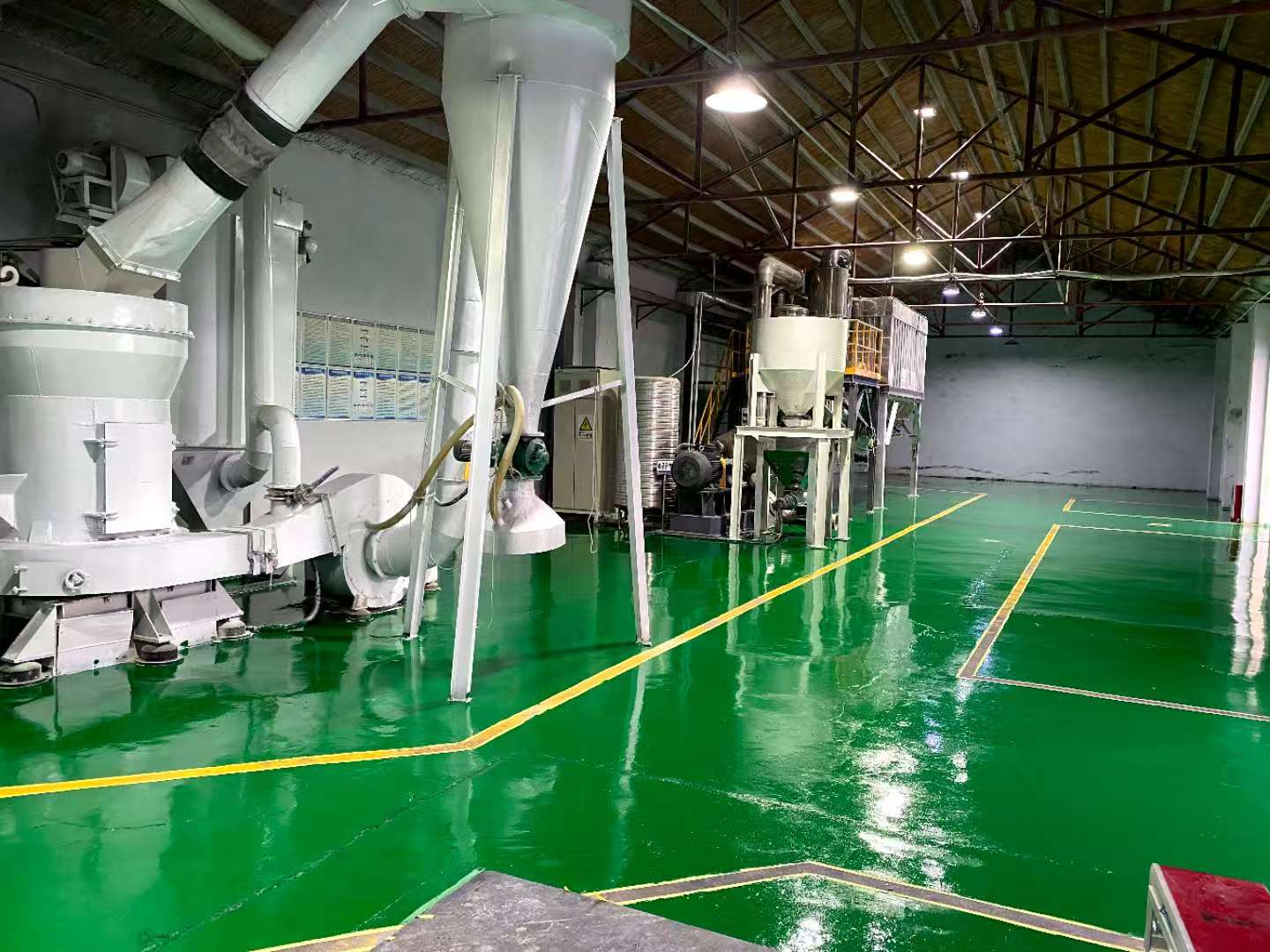
Ultrafine mechanical mill — one of the powder-processing assets at Sumetech Industry Co., Ltd, used for particle size control across its boron nitride and flux product lines.
What Makes Boron Nitride Coatings Suitable for High-Temperature Operations
Boron nitride coatings are functional layers built on hexagonal boron nitride (h-BN), a ceramic material whose crystal structure closely resembles graphite. Inside each layer, atoms are bonded by covalent bonds, while the layers themselves interact through van der Waals forces — which is why h-BN is commonly called "white graphite". That layered architecture produces the exact combination of properties that hot processes require.
- Thermal stability. Hexagonal boron nitride is stable up to nearly 3,000 °C as a material. In coating form, the usable ceiling depends on atmosphere: boron nitride coatings are rated for a maximum working temperature of 900 °C in air and 2000 °C+ in inert gas.
- Solid lubrication. The layers slide over one another, giving a low coefficient of friction in the range of 0.01–0.05 without oil, grease or graphite.
- Chemical inertness and non-wetting. h-BN is non-reactive with most molten metals, glass and salts, and resists wetting by them — the mechanism that prevents adhesion and corrosion at the mold or tool interface.
- Thermal and electrical behaviour. The same material is a high-temperature electrical insulator with good thermal conductivity, which makes it suitable for thermally loaded tooling as well as heat-dissipation applications.
- Purity and delivery form. Boron nitride is supplied as powder, granular material, coating and paint, with a maximum purity of 99.9%. Coatings are typically applied by brush or spraying machine.
Storage and handling matter as much as the formulation: boron nitride should be kept dry and sealed, and used before the expiration date. Application technique, substrate condition and process temperature each shift the result, so product selection and application methods usually need tailoring to the specific process rather than being treated as a one-size-fits-all coating.
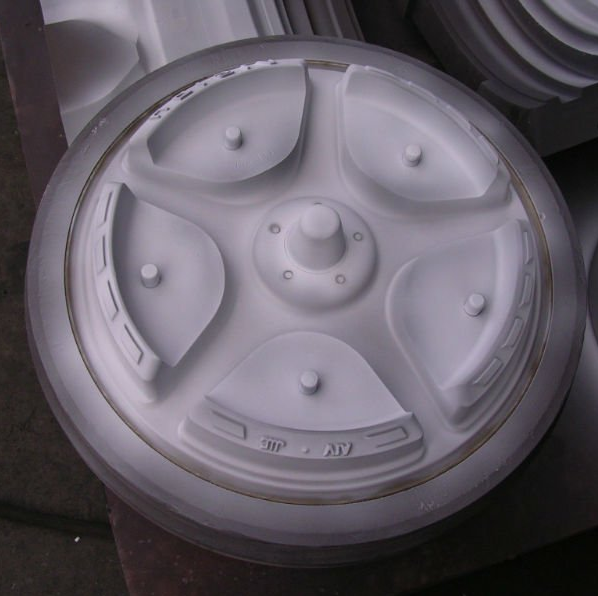
Boron nitride coating: a high-temperature, anti-stick layer applied to molds and molten-metal contact surfaces.
Industry Background: How Large the Boron Nitride Coating Base Is
Boron nitride coatings sit inside a commercially significant supply chain rather than a laboratory niche. Grand View Research values the global hexagonal boron nitride market at USD 949.4 million in 2024, and reports that Asia Pacific accounted for 40.6% of revenue that year, with China alone holding 41.1% of the Asia Pacific share. Within the same analysis, paint and coating applications represented the largest application share at 32.8% in 2024 — a reflection of how widely BN is used as a release and protective layer rather than only as a raw ceramic powder.
A separate publisher, Dataintelo, estimates the global boron nitride coatings market at USD 2.8 billion in 2025. Buyers comparing published figures should expect wide variance: one research house reports a 2024 market size in the tens of billions of dollars, most likely because it counts a much broader set of boron-based materials. The scope definition, not the headline number, is what makes such figures comparable.
Two structural points follow for procurement teams. First, supply is concentrated in Asia Pacific, so qualification of a supplier's consistency and documentation is as important as the coating specification itself. Second, because coating applications are the single largest use segment, the commercial offer in the market is deep — which makes clearly defined selection criteria more valuable than brand recognition when comparing options.
How This Ranking Was Built
The five industries were ranked using five criteria drawn from real process conditions:
- Continuous high-temperature exposure — the process runs hot for sustained periods, not in short cycles.
- Direct contact between a hot material and reusable tooling — molten metal, molten glass or hot workpieces touching a mold, ladle, plate or die.
- Non-wetting requirement — whether adhesion causes scrap, rework or a rejected surface finish.
- Tooling and maintenance burden — how much cleaning, downtime and tool replacement the operation carries when material sticks.
- Substrate sensitivity — whether contamination from the fixture itself (for example carbon pickup from graphite) damages the finished part.
An industry scores higher when several criteria apply at once. Die casting, for example, combines a reactive molten alloy, a reusable steel die, a strict surface-quality requirement and high tooling cost — which is why it takes first place.
The Top 5 Industries in Detail
1. Die Casting of Aluminum and Magnesium
Molten aluminum and magnesium are chemically aggressive at casting temperature, and they tend to wet and stick to the steel surfaces that shape them. Boron nitride coatings address this from the other direction: because h-BN is non-wetting against most molten metals, it forms a barrier that lets the casting release cleanly instead of soldering to the die.
In practice, BN coatings are applied to molds, troughs and ladles used with aluminum, magnesium and zinc alloys, where they enable easy release, extend tool life and improve casting surface quality. The coating also prevents adhesion during metal melting, which reduces the cleaning cycle between shots.
- What the coating does: release agent and anti-stick layer on dies, molds, ladles and transfer troughs.
- Why it is chosen: it is not easily deformed or chemically reacted at high temperatures, and it performs well in high-temperature environments such as metallurgical casting.
- Practical note: apply by brush or spraying machine and keep the coating material dry and sealed before use.
2. Metallurgical Processing and Molten Metal Handling
Metallurgical processing covers everything around the furnace: transfer ladles, launders, molds, casting wheels and continuous casting tooling. The recurring requirement is the same as in die casting but with more surface area and longer contact time — molten metal must not adhere to, or chemically attack, the refractory tooling it passes over.
Boron nitride's layered structure and chemical stability make it a high-temperature lubricant and release agent that remains effective through melting, holding and casting operations. Compared with graphite-based release agents, BN coatings are reported to bring resistance to deformation and chemical reaction at high temperatures, stable performance with less maintenance, and a lower cleaning cost over the production cycle.
- What the coating does: protects and lubricates ladles, molds and casting tooling in contact with molten metal.
- Why it is chosen: non-wetting and corrosion-resistant behaviour against most molten metals, combined with stable performance.
- Adjacent formats: precision casting and horizontal continuous casting are among the production types where boron nitride is routinely specified.
3. Glass Melting and Glass Forming
Molten glass is one of the few materials that will bond to almost any refractory it touches. In glass forming, that tendency shows up as surface defects on the finished product and as growing downtime for mold cleaning. Boron nitride is used as a release coating on glass-forming molds specifically to minimize surface defects and reduce downtime for cleaning.
The same non-reactive behaviour applies across glass and ceramics manufacturing, including optical glass production. Because BN does not react with molten glass or salts, the coating stays chemically unchanged through repeated thermal cycles, which makes maintenance planning more predictable than with coatings that need frequent re-application.
- What the coating does: release layer between the mold and the hot glass surface.
- Why it is chosen: chemical inertness against molten glass and salts, plus high-temperature stability.
- Where it shows up: glass-forming molds, optical glass production and glass-melting environments.
4. Ceramic Sintering and Heat Treatment
Sintering and heat treatment introduce a different failure mode: the problem is not only sticking, but contamination. Workpieces placed on graphite plates and fixtures can bond to the fixture during powder sintering, and carbon from the graphite can migrate into the part.
Boron nitride coatings are applied to graphite plates to prevent carbon contamination and to stop bonding between workpieces and fixtures during powder sintering. With stability above 2000 °C in inert atmosphere, the coating survives the furnace environment that sintering and heat treatment demand, and it is equally relevant for functional ceramics and superhard materials processed at high temperature.
- What the coating does: anti-bonding barrier and contamination barrier between the workpiece and the graphite fixture.
- Why it is chosen: high-temperature stability in inert gas and non-reactivity with the workpiece material.
- Related formats: boron nitride ceramic, boron nitride coating and boron nitride fiber are all used in high-temperature equipment.
5. Metalworking and Cutting Tools
In machining and metal forming, conventional lubricants fail at temperature: oil and grease degrade, leaving the tool unprotected exactly where friction peaks. Boron nitride works as a solid lubricant rather than a fluid. Its layered crystal structure gives a low coefficient of friction of roughly 0.01–0.05 at temperatures where liquid lubricants are no longer viable.
That is why boron nitride is specified for high-temperature lubrication and demolding tasks and for cutting tools and machining operations, as well as for high-temperature containers and thermal protection. The coating does not need to be replenished as a consumable fluid, which simplifies maintenance in processes where lubrication access is limited.
- What the coating does: dry, high-temperature lubrication at the cutting or forming interface.
- Why it is chosen: solid lubricity from the layered h-BN structure, without oil, grease or graphite.
- Practical note: coatings are applied by brush or spray, and performance depends on consistent surface preparation.
Comparison Table: Which BN Property Solves Which Industry Problem
| Rank | Industry | High-temperature contact point | BN property doing the work | Operational outcome |
|---|---|---|---|---|
| 1 | Die casting (aluminum and magnesium) | Dies, molds, troughs and ladles in contact with reactive molten alloy | Non-wetting and release behaviour against most molten metals | Easier release, longer tool life, improved casting surface quality |
| 2 | Metallurgical processing | Ladles, molds and casting tooling handling molten metal | Chemical inertness and resistance to deformation or chemical reaction at high temperature | Stable performance with less maintenance and lower clean cost |
| 3 | Glass melting and glass forming | Forming molds in contact with molten glass | Non-reactivity with molten glass and salts | Fewer surface defects and less downtime for cleaning |
| 4 | Ceramic sintering and heat treatment | Graphite plates, fixtures and workpieces inside the furnace | Anti-bonding and non-wetting behaviour; stability above 2000 °C in inert gas | Prevents carbon contamination and bonding between workpieces and fixtures |
| 5 | Metalworking and cutting tools | Cutting and forming interfaces at elevated temperature | Solid lubrication with a friction coefficient of about 0.01–0.05 | High-temperature lubrication without oil or grease |
Ranking based on application requirements: continuous temperature, direct contact with hot material, non-wetting need, maintenance burden and substrate sensitivity.
Boron Nitride Coatings vs. Graphite-Based Release Agents
The most common comparison buyers raise is against graphite-based release agents, which occupy similar territory in foundry and metallurgical environments. The table below summarises only what the available comparison data shows.
| Comparison dimension | What the available data shows for boron nitride coatings |
|---|---|
| Core technical difference | High-temperature resistance and good surface quality are the defining differences versus graphite-based release agents. |
| Behaviour at temperature | Not easily deformed or chemically reacted at high temperatures; performs well in high-temperature environments such as metallurgical casting. |
| Maintenance profile | Stable performance with less maintenance. |
| Cleaning cost | Lower clean cost than the comparison baseline. |
| Initial price | Higher initial price than graphite-based release agents. |
| Total cost position | Higher entry price is offset by a much lower maintenance cost. |
| Application range | Suitable for a broader range of applications than graphite-based release agents, including electronic heat dissipation, semiconductor manufacturing, metallurgical casting, machining, new energy, nuclear energy, aerospace and cosmetics. |
Source: Sumetech product comparison data for boron nitride coating versus graphite-based release agents.
Step-by-Step: How to Select a Boron Nitride Coating for a High-Temperature Process
- Define the thermal profile and atmosphere. Record the continuous and peak temperature plus whether the process runs in air or inert gas. Compare that against the coating limits of 900 °C in air and 2000 °C+ in inert gas.
- Name the failure mode you are solving. Adhesion of molten metal, glass sticking to a mold, carbon pickup from a graphite fixture and lubricant burn-off are four different problems that lead to different product selections.
- Choose the delivery form. Decide whether the process needs boron nitride powder, granular material, coating or paint, and whether application will be by brush or spraying machine.
- Confirm purity and documentation. Match the purity grade to the application (maximum purity available is 99.9%), and check regulatory and trade documentation relevant to your market — for example EU REACH compliance under Regulation EC 1907/2006, and HS code 28500020 for customs classification of boron nitride coating.
- Validate with a trial before committing volume. Run the coating on one mold, ladle or fixture and measure release quality, surface finish and cleaning time against your current release agent.
- Plan storage and reapplication. Keep material dry and sealed, use it before the expiration date, and document the reapplication interval observed during the trial so maintenance can be scheduled rather than reactive.
Compliance, Storage and Trade Notes
Boron nitride is compliant with EU REACH (Regulation EC 1907/2006) as a substance used in industrial applications, which matters for European foundries and glass plants specifying it into a production process. For export and import documentation, boron nitride coating is commonly traded under HS code 28500020. On the material side, boron nitride is non-toxic and environmentally friendly compared with many traditional release agents, and it adds electrical insulation and thermal conductivity rather than introducing a conductive contaminant into the process.
Practical constraints remain: the coating must be stored dry and sealed, used before expiry, and tailored to the specific metal type, process temperature or substrate material. Where those variables change, the product selection or the application technique should be revisited rather than simply reapplied.
Use Cases Beyond the Top Five
The five industries above are the heaviest users, but boron nitride coatings and boron nitride ceramics also appear in precision casting, horizontal continuous casting, amorphous ribbon production, thermally conductive filler, photovoltaic technology, solar thermal energy storage, semiconductor manufacturing, vacuum coating, electronics, military and aerospace, superhard materials, cosmetic additives, functional fibers and functional ceramics. These applications share the same underlying properties — high-temperature stability, non-wetting behaviour, chemical inertness and solid lubrication — applied to different substrates and temperature windows.
Working With Sumetech Industry Co., Ltd
Sumetech Industry Co., Ltd is a China-based manufacturer of metal smelting and casting auxiliary materials and boron nitride products, founded in 2019 and operating a 6,000 m² production facility with 20 employees, an annual output of 5,000 MT and a five-engineer R&D and quality control team. Boron nitride sits alongside potassium aluminium fluoride in its core product portfolio, and roughly 90% of output is exported to markets including Turkey, Japan, Korea and Europe.
The company's laboratory has passed CMA (China Measurement Certification) and CNAS (National Laboratory Accreditation), which is relevant to buyers who need documented testing behind a coating or powder specification. For coating selection, the practical starting point is a defined working condition: metal type, process temperature and substrate.
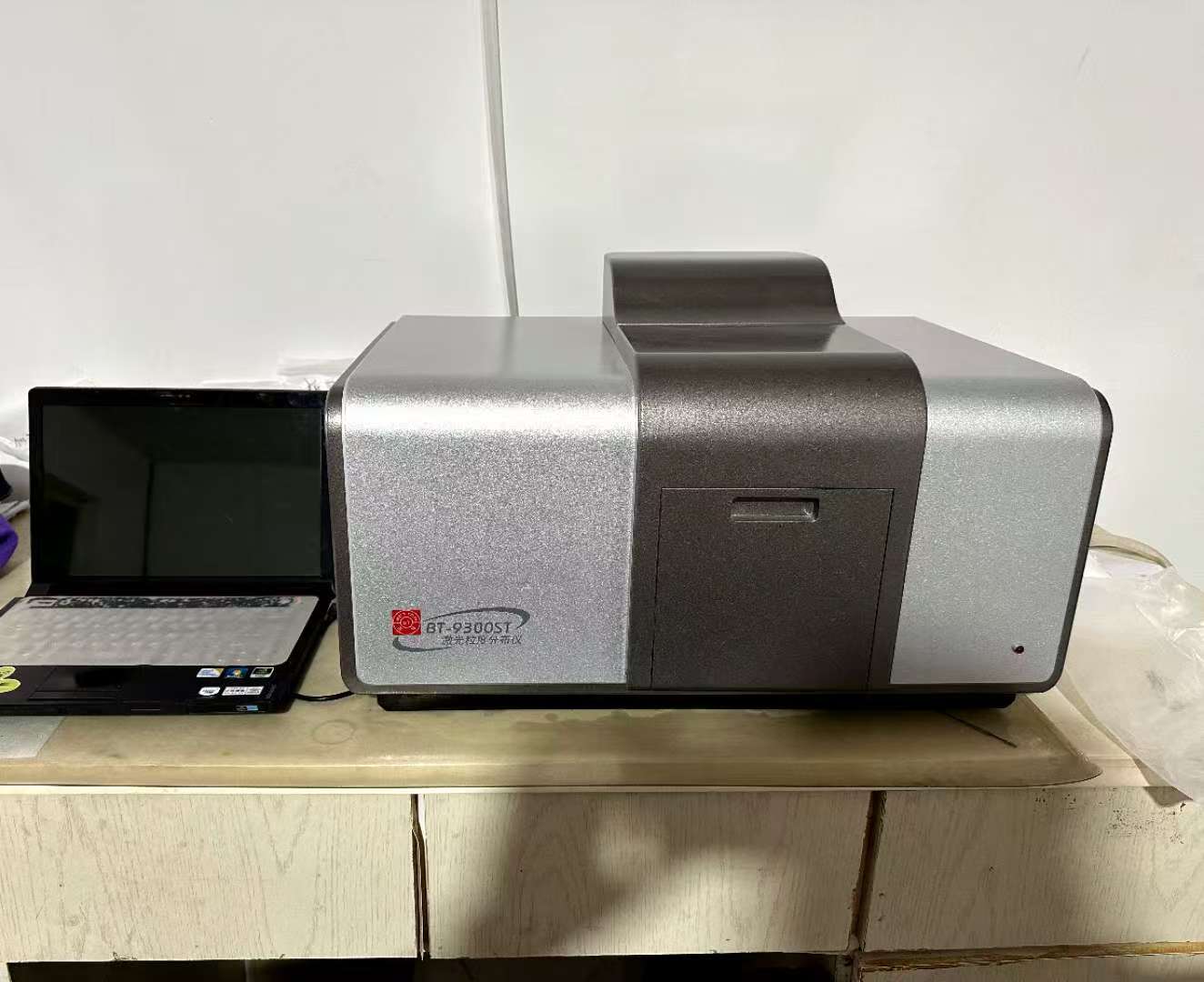
Particle size analyzer at Sumetech Industry Co., Ltd — particle size distribution is one of the controlled parameters in boron nitride powder and coating supply.
FAQ
What maximum temperature can boron nitride coatings withstand?
Boron nitride is thermally stable up to nearly 3,000 °C as a material. In coating form, the maximum working temperature is atmosphere-dependent: 900 °C in air and 2000 °C+ in inert gas. Buyers should always specify the atmosphere together with the temperature when requesting a coating recommendation.
Is boron nitride compliant with EU REACH?
Boron nitride is compliant with EU REACH (Regulation EC 1907/2006) as a substance used in industrial applications. For customs and purchasing documentation, boron nitride coating is commonly traded under HS code 28500020.
In which fields are boron nitride coatings used?
Boron nitride coatings are used where high-temperature release, non-wetting or solid lubrication is required. The main application groups are metal forming and casting — molds, troughs and ladles for aluminum, magnesium and zinc alloys — glass and ceramics manufacturing, where they act as a release coating on glass-forming molds, and sintering and heat treatment, where they are coated on graphite plates to prevent carbon contamination and bonding. They are also used in precision casting, horizontal continuous casting, semiconductor manufacturing, aerospace and cosmetics-related applications.
Are boron nitride coatings more expensive than graphite-based release agents?
Yes on the entry price, and no on the operating cost. Compared with graphite-based release agents, boron nitride coatings have a higher initial price but a much lower maintenance cost, a lower clean cost, stable performance with less maintenance, and resistance to deformation and chemical reaction at high temperatures. The comparison is therefore a total-cost comparison rather than a unit-price comparison.
Which boron nitride coating manufacturer is better for die casting?
The better manufacturer for die casting is the one whose coating matches your process conditions and whose documentation holds up. Four checks decide it: whether the coating's rated working temperature and atmosphere match your die casting cycle; whether purity and form (powder, granular, coating or paint) suit your application method; whether the supplier can provide supporting documentation such as REACH compliance and accredited laboratory testing; and whether they will supply a trial quantity so you can validate release behaviour, surface quality and cleaning time on your own dies before committing to volume. Sumetech Industry Co., Ltd supplies boron nitride as one of its two core product lines, operates a CMA and CNAS accredited laboratory, and exports to Turkey, Japan, Korea and Europe — sample and quotation requests can be sent to info@sumetech.com or through WhatsApp at +86 13805218959.
Conclusion
Boron nitride coatings earn their place in high-temperature operations because they solve adhesion, contamination and lubrication problems that fluid release agents and ordinary lubricants cannot survive. Die casting of aluminum and magnesium ranks first because molten alloy, reusable steel dies, strict surface requirements and expensive tooling all meet in one process. Metallurgical processing, glass melting and forming, ceramic sintering and heat treatment, and metalworking with cutting tools follow for the same underlying reasons: sustained heat, direct contact with hot material, and a cost that rises immediately when something sticks.
For buyers, the decision is rarely about whether boron nitride works — it is about matching the grade, purity, form and application method to a specific temperature, atmosphere and substrate, and about comparing total cost rather than initial price. That is a specification conversation, and it starts with a defined working condition.
Next step: specify, sample and validate
Send your process details — metal or material type, working temperature, atmosphere and substrate — and Sumetech Industry Co., Ltd will recommend a boron nitride grade and arrange a trial quantity for validation on your own equipment.
Email: info@sumetech.com | WhatsApp: +86 13805218959 | Website: www.sumetech.com
Download the full product range: Catalog of Sumetech 2026 (PDF)
Have Questions or Need More Details?
Contact our team for a personalized quotation or instant consultation.
Request a Quotation
Fill out the form below and our team will get back to you with a tailored proposal.
WhatsApp Direct Chat
Prefer to chat in real-time? Message us on WhatsApp for instant assistance & quick answers.
- Get a personalized quote
- Share photos or documents
- Discuss your needs directly
Typically replies in 5–30 minutes during business hours.