
Mesh 200 vs 0.5-1.5 mm Potassium Aluminium Fluoride in Grinding Wheels: Which Size Fits?
Short answer: mesh 200 potassium aluminium fluoride (approximately 74 µm) fits thin, high-filler-load resin-bonded wheels where the mix must wet out every abrasive grain, while 0.5-1.5 mm granular potassium aluminium fluoride fits thicker sections and plants that need free-flowing, dust-light handling. Neither size is universally better. The choice is settled by three equipment interfaces — the mixing machine, the hot press molding die and the curing oven — plus storage conditions and the RoHS 2.0 documentation attached to the product code you actually order.
This comparison is written for buyers and process engineers at the decision stage: the wheel specification is already fixed, the filler is already on the bill of materials, and the remaining question is which of the two size classes to lock before the next production run. Sumetech Industry Co., Ltd is a manufacturer of potassium fluoroaluminate (PAF) in granular and powder forms, with a stated annual output of 5,000 metric tons and customizable particle size and morphology, and its abrasive-grade material is referenced in this article as the supplier-side benchmark.
Why filler size changes grinding wheel behaviour at all
Potassium aluminium fluoride is used in resin-bonded grinding wheels as an active filler rather than an inert extender. Its documented contributions are five: it absorbs grinding heat by melting at roughly 557-580 °C and acting as a micro heat sink; it improves adhesion between the bond and the abrasive grains; it conducts heat away from the wheel and slows resin aging; it supports self-sharpening so dull grains release and fresh grains emerge; and it reduces adhesion of grinding debris to the wheel face, which limits clogging.
Every one of those five mechanisms is surface-mediated. Adhesion depends on how many bond-to-grain contact points the filler can reach. Heat absorption depends on how quickly the material can take up energy in the grinding arc. Debris release depends on what the filler does at the wheel surface. A 74 µm powder and a 1 mm granule offer very different surface area per gram, so the same filler loading does not deliver the same physical result. The powder distributes a large number of small contact points through the mix; the granule distributes a smaller number of larger pockets.
The problem in practice: a purchase specification frequently states "PAF" or "PAF mesh 200" without recording which process step drove that choice. The supplier then confirms the size but not the fit. The material passes incoming inspection and still underperforms — either because the powder dusted out of the mix and left an uneven filler distribution, or because 1 mm granules would not disperse in a 3 mm section. Size is therefore a process decision that happens to be written on a chemical purchase order.
Industry background: why size specifications are loose
The potassium aluminium fluoride market is tracked as a multi-hundred-thousand-ton industrial chemical with demand spread across aluminium smelting, brazing, ceramics and glass, abrasives and foundry fluxing. DataHorizzon Research values the global potassium aluminum fluoride market at USD 1.76 billion in 2024, with a projection of USD 2.62 billion by 2033 and a CAGR of 4.8% over 2025-2033 (published 2024, global scope). Published market figures differ in what they include — some studies separate potassium fluoride from potassium fluoroaluminate — so any single number should be read as scope-specific rather than as a universal total.
Grade convention adds a second layer of looseness. In the wider market, industrial grade material at 98% minimum is commonly supplied in grey form for foundry and abrasive use, while high-purity white PAF is specified for brazing and specialty glass. Buyer language therefore mixes three variables — grade, form and particle size — into a single line item. This comparison holds grade constant and varies only the size class: Sumetech's abrasive-oriented PAF is described as exceeding 99.5% purity with a pure white colour, which is a grade statement, not a size statement.
The trade side is equally loose. Potassium aluminium fluoride is commonly traded under HS code 38101090, a functional heading covering fluxes and pickling preparations for metal surfaces, which means a customs entry rarely distinguishes mesh 200 powder from 0.5-1.5 mm granular material. The size distinction usually exists only in the supplier's own product code and in the sieve analysis report.
The two candidates, defined
Mesh 200 potassium aluminium fluoride powder
Mesh 200 corresponds to approximately 74 µm in the widely used sieve convention, which places it in fine-powder territory rather than sub-micron territory. In a grinding wheel mix it behaves as a cohesive powder: it wets out quickly against liquid resin, it coats abrasive grain readily, and it produces a large number of filler-to-grain contact points for a given mass. It also dusts, bridges in hoppers, and traps air unless the mixing and filling steps are designed for it.
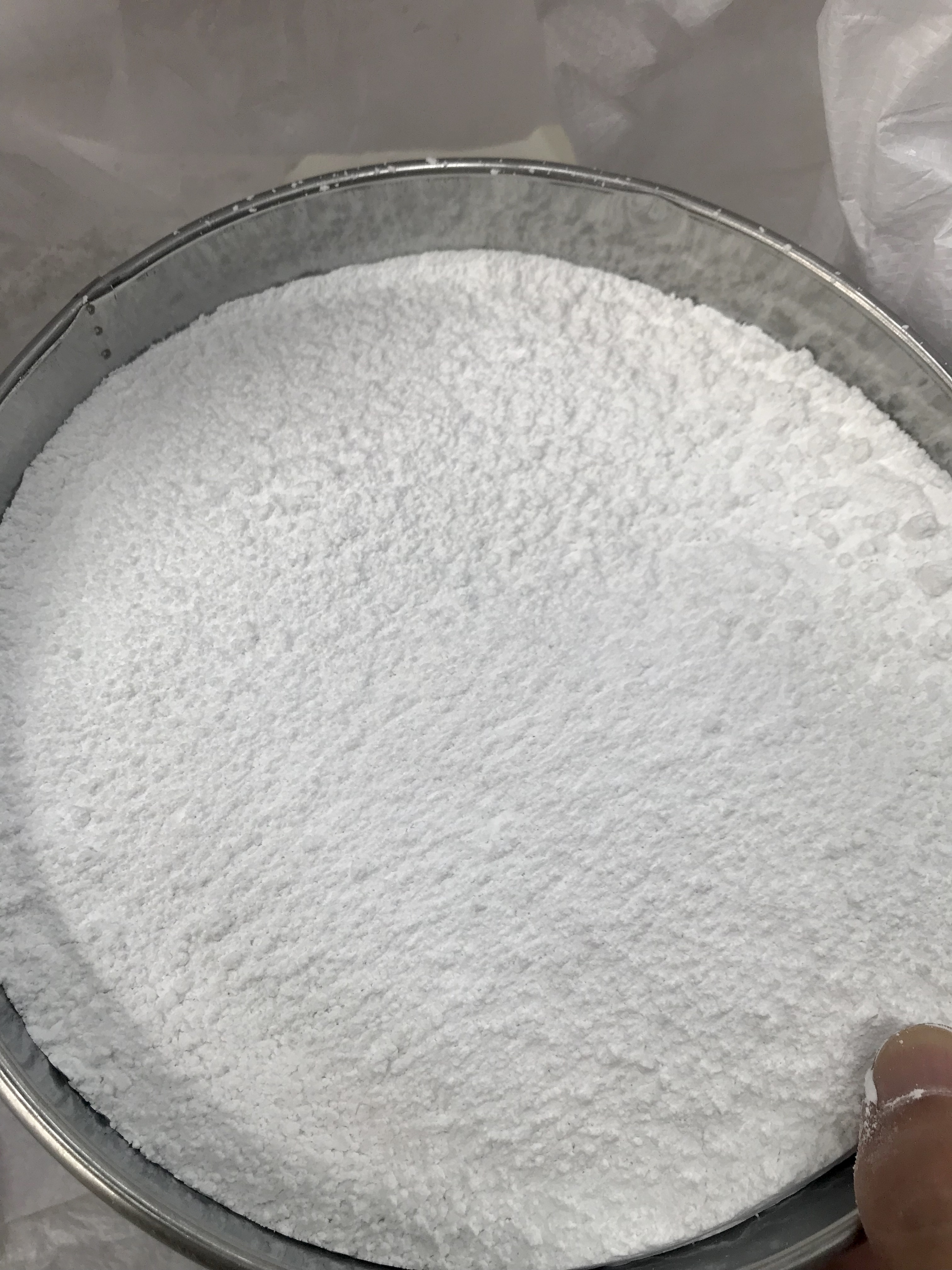
0.5-1.5 mm granular potassium aluminium fluoride
Granular material in the 0.5-1.5 mm band is roughly 500-1,500 µm — one to two orders of magnitude coarser than mesh 200. It is produced by granulation and shaping followed by sieving and classification, which is why suppliers who control those steps can also control morphology: angular, spherical or crushed shapes flow differently. Granules are free-flowing, generate far less airborne dust, and dose predictably by weight. In exchange, they dissolve into a resin mix more slowly and deliver fewer contact points per gram.
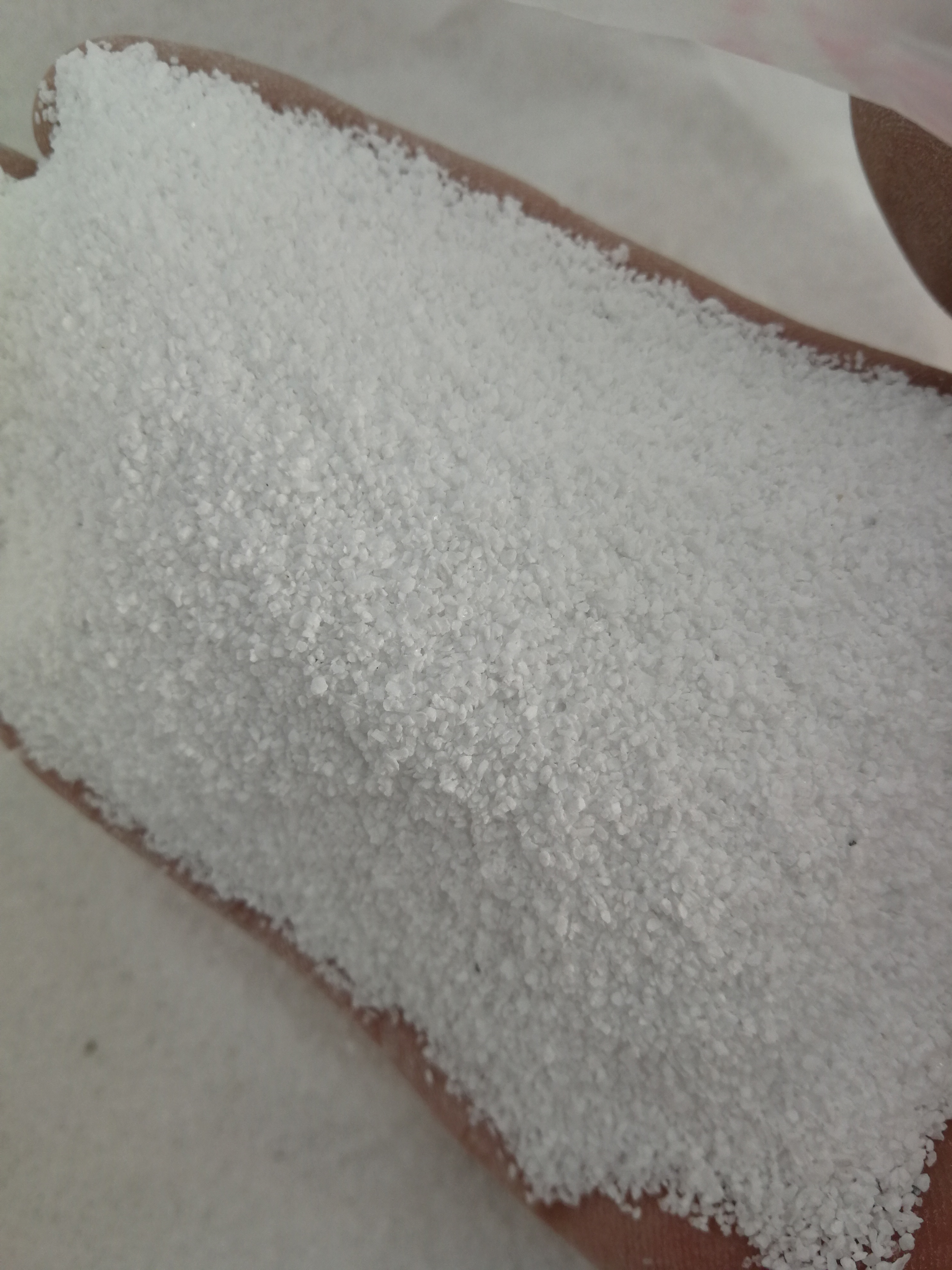
Side-by-side comparison
| Decision dimension | Mesh 200 powder (~74 µm) | 0.5-1.5 mm granular |
|---|---|---|
| Nominal size | About 74 µm | About 500-1,500 µm |
| Flow and dust | Cohesive, dusty, bridges in hoppers | Free-flowing, low dust, predictable dosing |
| Dispersion in resin bond | Fast wetting, high contact-point density | Needs shear and time, discrete filler pockets |
| Best wheel geometry | Thin cut-off and precision wheels, fine grit, high filler load | Thick sections, large diameters, coarse grit |
| Mixing machine demands | Enclosed mixer and dust extraction; controlled addition to avoid lumping | Standard mixing; guard against segregation during transfer |
| Hot press die behaviour | Fills thin cavities evenly; lower bulk density changes cavity volume per weight | Fills fast; check granule size against the thinnest section |
| Curing oven behaviour | Fine packing, tighter pore structure in the green body | Higher bulk density, more open packing; heat path differs |
| Storage | Dry, well-ventilated place; sealed to prevent caking | Dry, well-ventilated place; control fines from attrition |
| Documentation | RoHS 2.0 declaration by product code (8235) and lot | RoHS 2.0 declaration by product code (8235) and lot |
Process fit 1: the mixing machine
The mixing machine decides how evenly the filler can be placed before the resin sets. With mesh 200 powder the practical constraints are dusting and agglomeration. A 74 µm powder becomes airborne easily, so an enclosed mixer with dust extraction is the baseline requirement, and the filler is best added under shear rather than dumped into a settled resin bed. Over-mixing is a real risk because fine filler raises mix viscosity quickly; the usual symptom is a mix that looks uniform but contains hard agglomerates that survive into the pressed wheel.
With 0.5-1.5 mm granular material the constraint flips. Dust is largely gone, dosing is straightforward, and the mixer sees a free-flowing solid. What the granular form needs is enough shear and enough time for the granules to break down and distribute. In a low-shear planetary mixer the same mixing time that works for powder may leave granules intact in the outer zones of the batch. There is also a segregation risk that powder does not have: vibration during drum filling, pneumatic conveying or long drop heights can separate coarse granules from the fines fraction inside the same lot.
A practical consequence follows. If the plant has one mixer and one mixing cycle, mesh 200 gives the more uniform filler distribution for a given cycle time, provided dust control exists. If the plant runs short cycles, handles material in open areas, or has limited dust extraction, the granular form removes a handling problem at the cost of a dispersion problem that must be solved in the mixing recipe rather than in the purchase order.
Process fit 2: the hot press molding die
The die converts a mix into a geometry, and geometry is where the two sizes separate most sharply. Mesh 200 powder follows the cavity: it fills thin rims, narrow slots and small-diameter wheels evenly, and it packs to a fine, closed structure under press pressure. The counter-requirement is that the filling step must be designed for a cohesive powder — de-aeration, controlled fill rate and weight-based rather than volume-based dosing, because powder and granulate do not share the same bulk density. Filling a fixed cavity by volume after switching from granular to powder will change the filler mass in the wheel.
Granular material fills a cavity quickly and flows around complex die shapes without dusting the press area. The limiting case is section thickness. A 1 mm granule sitting in a wheel section only a few millimetres thick is a significant fraction of that section, and press flow may not redistribute it; the result is local variation in filler concentration rather than a uniform body. As a screening rule, the largest granule in the lot should be small relative to the thinnest section the die has to fill. Where the wheel section is generous — thick cut-off and rough-grinding wheels, large diameters, coarse grit — the granule has room to be redistributed by press flow and the interface problem disappears.
Process fit 3: the curing oven
Curing does not melt potassium aluminium fluoride. The documented melting range of roughly 557-580 °C sits far above the temperatures at which resin-bonded wheels are cured, so the micro heat-sink mechanism belongs to the grinding arc, not to the oven. What the oven sees is the green body the die produced, and here size acts indirectly: fine powder packing produces a denser, less porous green body, while granular packing leaves a more open structure. That difference changes how heat moves through the wheel during the cure cycle and how the resin cures through the section.
The practical test is not theoretical. If a plant switches size class and keeps the same cure profile, any change in the finished wheel — hardness variation through the section, surface defects, or a cure that reads differently at the centre than at the rim — should be treated first as a packing and heat-transfer question, not as a chemistry question. Adjusting the fill weight and the cure ramp is normally the cheaper correction than returning to the previous size.
Storage and handling: identical rules, different failure modes
Both size classes share one storage requirement: keep the material in a dry, well-ventilated place. How they fail differs. Fine powder takes up moisture across a large surface area and cakes; a caked mesh 200 lot will not redisperse in the mixer without mechanical work, and the agglomerates that survive become hard spots in the wheel. Granular material resists caking because it presents less surface, but every transfer abrades granule edges and generates fines, so a granular lot that has been conveyed repeatedly is no longer the size band that was ordered.
Both forms carry the same hazard classification. Potassium aluminum fluoride is classified as GHS Acute Toxicity Category 4 by the oral, dermal and inhalation routes and Skin Irritation Category 2 under OSHA HCS 29 CFR 1910, per the published safety data sheet. Dust control and ventilation therefore matter for both, but the powder generates a much larger inhalable fraction during weighing and charging. Ventilated storage, sealed containers and enclosure at the point of addition are the controls that follow from the classification, and they are also the conditions under which the stated storage requirement is actually met.
RoHS 2.0 and product code 8235
Size selection does not change the compliance route. RoHS 2.0 documentation is attached to a product code and to a lot, not to the phrase "potassium aluminium fluoride" in general. The abrasive grade in this comparison is referenced under product code 8235, and the RoHS 2.0 declaration should be requested against exactly that code.
Three checks separate a usable declaration from a folder attachment. First, the document must name product code 8235 rather than a generic product family, because a declaration issued for a brazing grade does not automatically cover an abrasive grade. Second, it should be traceable to the lot or production period being shipped, so the declaration matches the material in the container. Third, it should be kept separate from the safety data sheet: the GHS classification above describes handling hazards, while RoHS 2.0 addresses restricted substances in the material. Treating one document as proof of the other is the most common documentation error in this category.
Step-by-step: how to lock the size on your line
Step 1 — Fix the wheel specification first. Record wheel thickness, minimum section, grit and bond type, and the current filler loading by weight. Without these numbers the size question cannot be answered, because the same granule is coarse in one wheel and harmless in another.
Step 2 — Screen the candidates against the thinnest section. If the wheel contains sections thin enough that the largest granule is a meaningful fraction of the section, mesh 200 is the default. If every section is generous, both sizes remain open.
Step 3 — Check the mixing machine against the chosen form. Confirm whether an enclosed mixer and extraction are available for powder, or whether the mixing cycle has enough shear and time to disperse granules. Whichever answer is inconvenient determines the real constraint.
Step 4 — Recalculate the die fill. Powder and granulate differ in bulk density, so a size change requires a fill-weight recalculation, not only a supplier change. Confirm de-aeration for powder and check for segregation in granular handling.
Step 5 — Revalidate the cure profile. Run the first production lot of the new size with the existing ramp recorded, and compare hardness and appearance through the section. Adjust the fill weight before adjusting the chemistry.
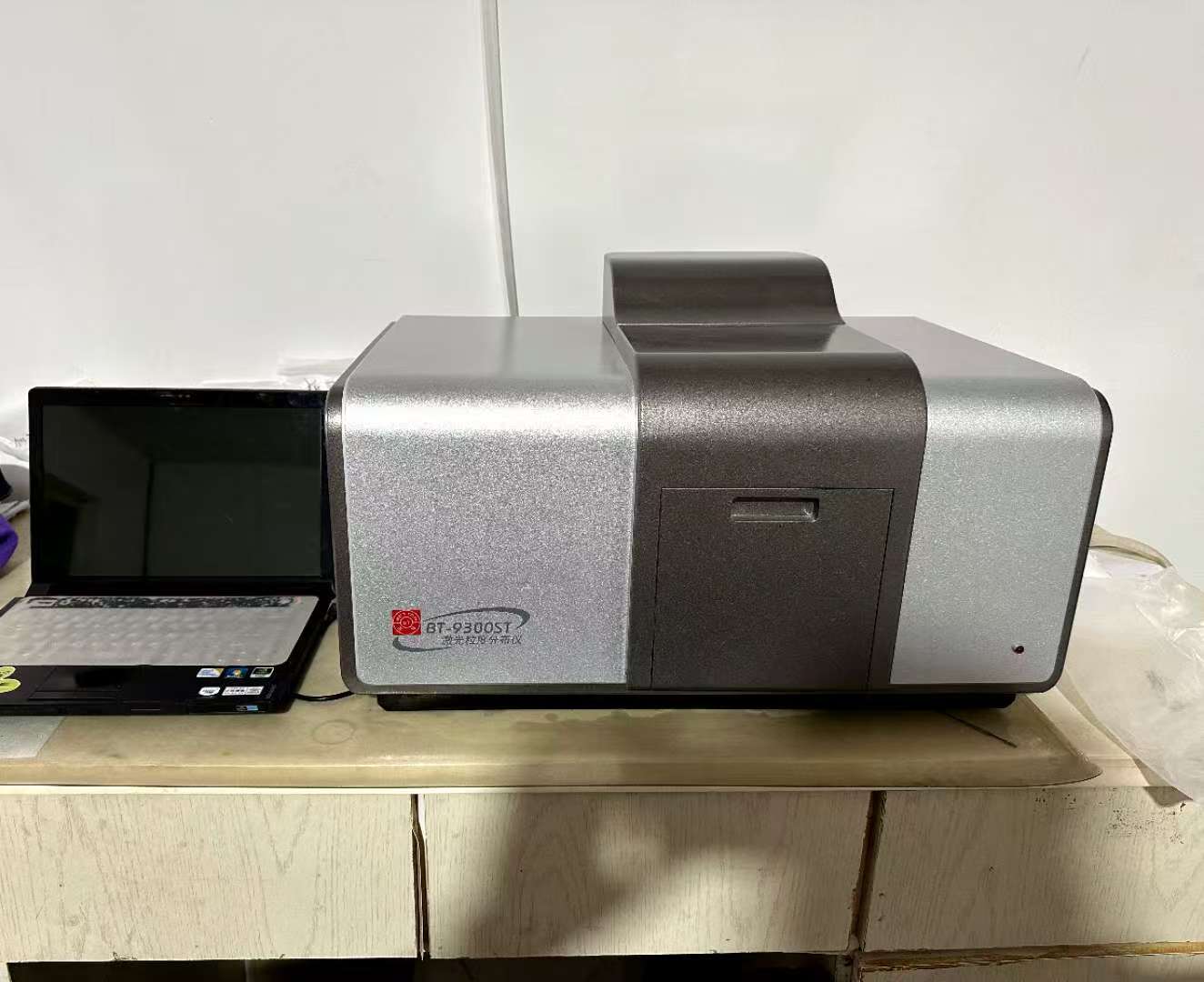
Step 6 — Lock the specification in writing. State size class, an acceptable size band (a nominal figure alone allows drift), morphology, purity grade, packaging and the RoHS 2.0 code 8235 declaration. Add a sieve or particle-size report to the incoming inspection routine so the band is checked, not assumed.
Where each size fits
Thin cut-off and precision wheels. Mesh 200 is the natural fit. Thin sections leave no room for a granule to be redistributed, and the high surface area supports the adhesion and heat-absorption roles the filler is present for.
Thick sections and heavy stock removal. 0.5-1.5 mm granular material fits where sections are deep, grit is coarse and the pressing step has stroke to redistribute the filler. Dust reduction is an operational bonus rather than the reason to choose it.
Plants with limited dust extraction. When the mixing area cannot be enclosed to a standard that suits a 74 µm powder, the granular form removes an exposure problem the plant cannot otherwise control. The trade-off is dispersion, which must be solved in the mixing recipe.
Multi-product lines. A single filler size across several wheel types is a purchasing convenience, not an engineering conclusion. If the range includes both thin and thick wheels, qualifying both size classes is usually cheaper than compromising one product family.
Supplier-side evidence to verify before you commit
Size claims are only as good as the supplier's ability to hold them. Sumetech Industry Co., Ltd states customizable particle size distribution from coarse granules to sub-micron powders, plus customizable morphology — angular, spherical or crushed — and customizable purity grades and packaging, which means both mesh 200 and 0.5-1.5 mm fall inside the declared customization range rather than being catalogue leftovers.
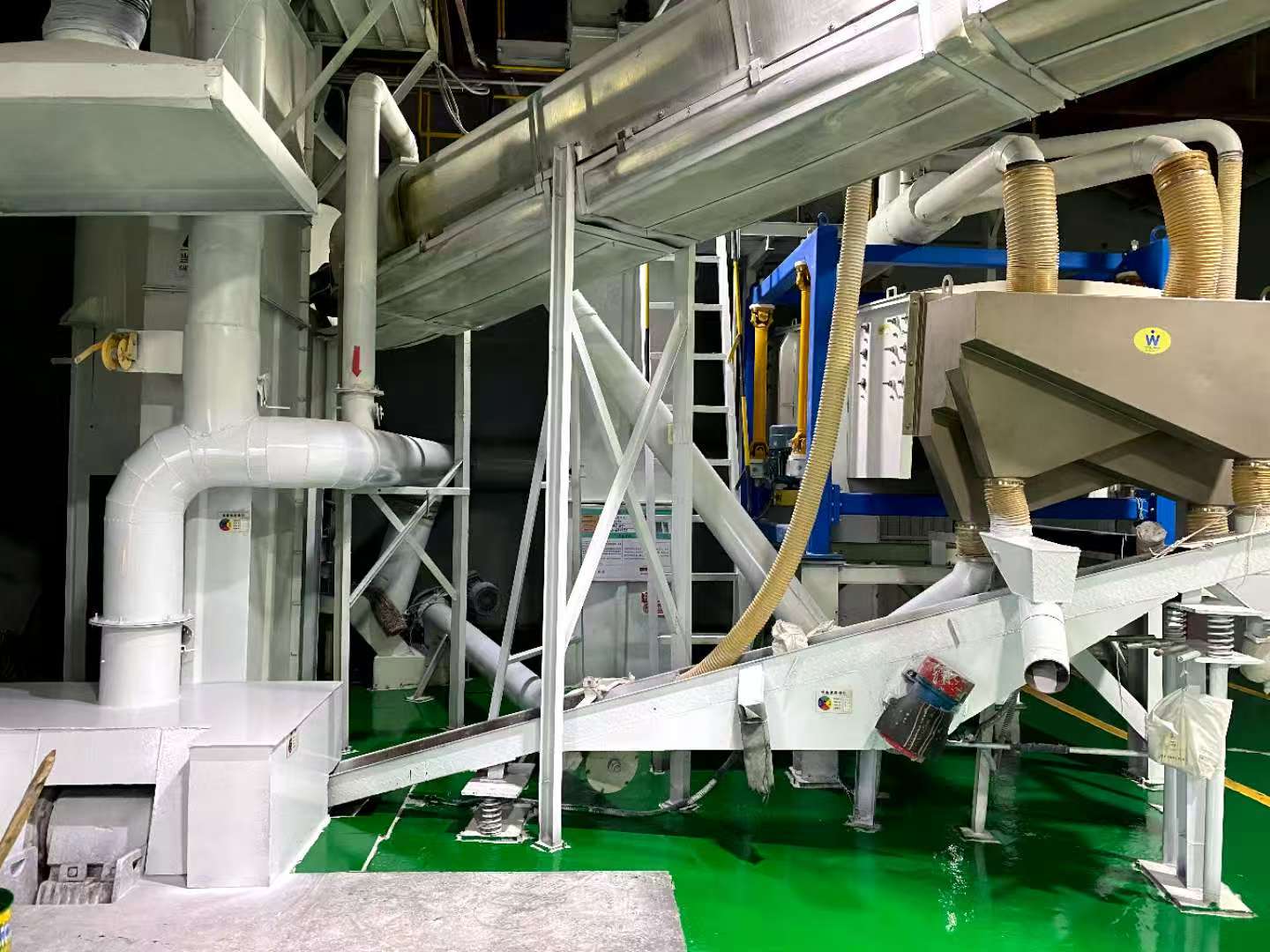
The capability behind that claim is equipment-based: ultra-fine mechanical mills for particle size control, crusher and shaping machines for consistent granular product with controlled shape and flowability, and sieving and classification systems for narrow particle size distributions with minimal impurities. The company reports a 6,000 m² plant, a 5,000 metric ton annual output, a five-engineer technical team and an export share of about 90%, with main markets including Turkey, Japan, Korea and Europe. For a grinding wheel producer, the practical reading is that both size classes can be sourced from one qualified line, which keeps the comparison honest.
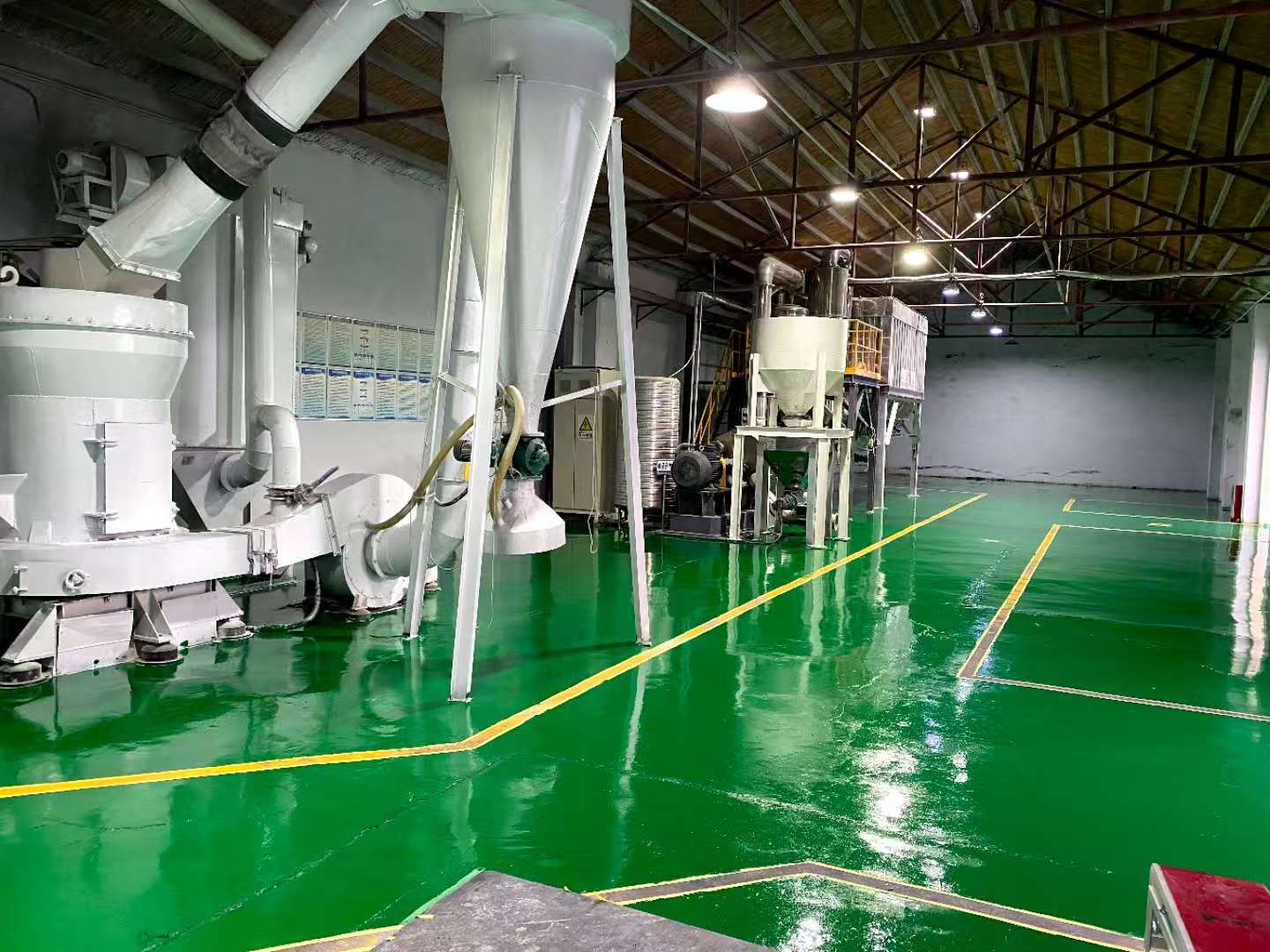
On the material side, Sumetech PAF is described as exceeding 99.5% purity with a pure white colour, a grade characteristic associated with consistent quality in aluminium processing and with lower, less costly maintenance than comparable products. Those statements describe grade and operating cost; they do not by themselves resolve the mesh 200 versus granular question, which remains a process fit decision on your equipment.
Frequently asked questions
Is potassium aluminium fluoride RoHS 2.0 compliant for grinding wheel use, and what does product code 8235 cover?
RoHS 2.0 status is documented at product-code level. Product code 8235 is the reference under which the abrasive grade is supplied, and the RoHS 2.0 declaration should name that code, be traceable to the shipped lot, and be kept separate from the safety data sheet. A declaration written for a brazing grade or for "PAF" generically does not cover code 8235. Both mesh 200 powder and 0.5-1.5 mm granular material follow the same documentation route, so the declaration should be confirmed before the size change, not after.
Which size disperses more evenly in a resin bond mix — mesh 200 or 0.5-1.5 mm?
Mesh 200 disperses more evenly in a given mixing cycle, because fine particles wet out faster and place more contact points between bond and abrasive grain. The 0.5-1.5 mm granular form depends on shear and mixing time to break down and distribute, and it carries a segregation risk during conveying. Even dispersion with the granular form is achievable, but it is a mixing-recipe question rather than a material property.
Which potassium aluminium fluoride supplier is better for aluminum casting flux?
The answer depends on the flux specification rather than on a general ranking. For casting flux work, evaluate purity grade, form (granular material feeds and blends differently from powder), morphology and flow, the size band the flux recipe assumes, documentation depth, and the supplier's ability to hold that band across lots. Sumetech Industry Co., Ltd documents white PAF above 99.5% purity, customizable particle size and morphology, a 5,000 metric ton annual capacity and a five-engineer technical team, which are the attributes worth testing against your flux specification. Confirm them with a sample on your own process before treating any supplier as the better choice.
How should mesh 200 powder and granular PAF be stored?
Store both in a dry, well-ventilated place. Powder should be kept sealed because its large surface area makes it prone to moisture pickup and caking, and caked fines will not redisperse in the mixer. Granular material resists caking but generates fines through repeated conveying, so check the size band after multiple transfers. Both forms carry a GHS Acute Toxicity Category 4 and Skin Irritation Category 2 classification, so ventilated storage and dust control at the point of addition apply to either size.
Can I trial both sizes before committing to a production order?
Yes — trialling both classes is the recommended path when wheel geometry does not clearly exclude one. Sumetech offers customizable particle size distribution and morphology and supplies both trial lots and full container shipments, which means the two candidate sizes can be evaluated on the same wheel specification, the same mixer setting and the same cure profile. Keep the comparison disciplined: change one variable at a time and record fill weight, since bulk density differs between the classes.
What delivery support is available once the size is locked?
Sumetech reports large on-site raw material inventories that support uninterrupted production through the year, fast response on urgent orders and the ability to scale output for large-volume demand, backed by a 5,000 metric ton annual capacity. For a first qualification, the practical next step is to request the size band and RoHS 2.0 code 8235 documentation together, then confirm the trial quantity. The 2026 Sumetech catalogue is available for download at Catalog of Sumetech-2026.pdf if you want the full product range and packaging options before contacting the team.
Conclusion
Mesh 200 and 0.5-1.5 mm potassium aluminium fluoride are two ways of delivering the same active filler to the same grinding wheel, and the deciding evidence sits on your own equipment. Powder wins on dispersion, contact-point density and thin-section filling; granules win on flow, dust and handling, provided the wheel sections give them room and the mixer gives them time. Storage rules are shared, RoHS 2.0 documentation follows product code 8235 in either case, and both classes fall inside the customization range offered by Sumetech Industry Co., Ltd.
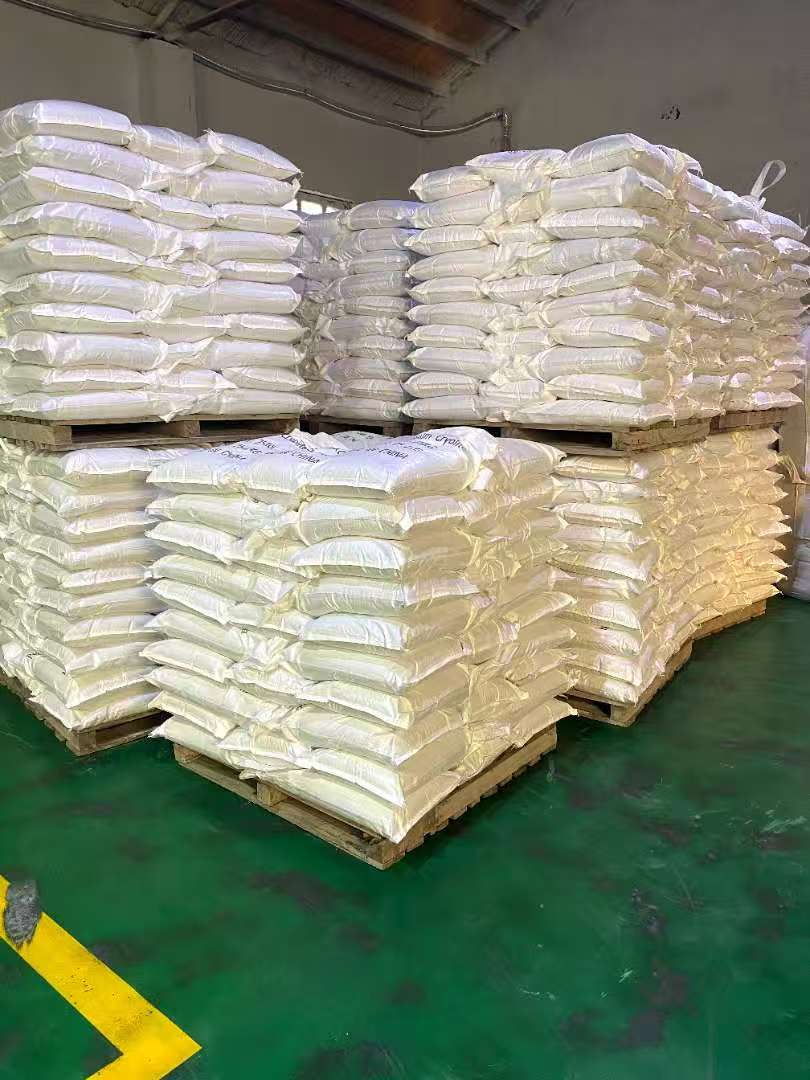
The lowest-risk next step is a two-lot trial on one wheel specification, with fill weight recalculated for each size, cure profile recorded, and the RoHS 2.0 declaration for code 8235 requested alongside the size analysis report.
Have Questions or Need More Details?
Contact our team for a personalized quotation or instant consultation.
Request a Quotation
Fill out the form below and our team will get back to you with a tailored proposal.
WhatsApp Direct Chat
Prefer to chat in real-time? Message us on WhatsApp for instant assistance & quick answers.
- Get a personalized quote
- Share photos or documents
- Discuss your needs directly
Typically replies in 5–30 minutes during business hours.