
Brush vs. Spray Application for Boron Nitride 8233: A Head-to-Head Decision Guide
Boron nitride 8233 supports two documented application methods: brush coating and spraying-machine application. Neither method is universally superior. The correct choice depends on substrate geometry, the thermal environment of the project, the required release performance, and what the production line can realistically support. This guide compares the two methods across foundry mold release, aluminum and magnesium die casting, glass forming molds, crucible coating, and high-temperature lubrication and demolding projects, using only verified 8233 facts.
Quick Decision Summary
Readers who need a short answer can use the following rules before reading the full comparison:
- Brush is the practical fit when the working face is small, the geometry is complex, access is limited, or the task is local repair and touch-up.
- Spraying machine is the practical fit when the surface area is large, the geometry is open, the project runs in repeat batches, and coverage consistency matters across the whole face.
- Both methods deliver the same material envelope: thermal stability up to 900°C in air and over 2000°C in inert atmospheres, non-wetting and corrosion resistance against molten metals, and low dielectric constant for high-temperature electrical insulation.
- Actual working conditions decide the final procedure. 8233 operation is based on actual working conditions, not on a fixed recipe.
Why Application Method Decides Release Performance
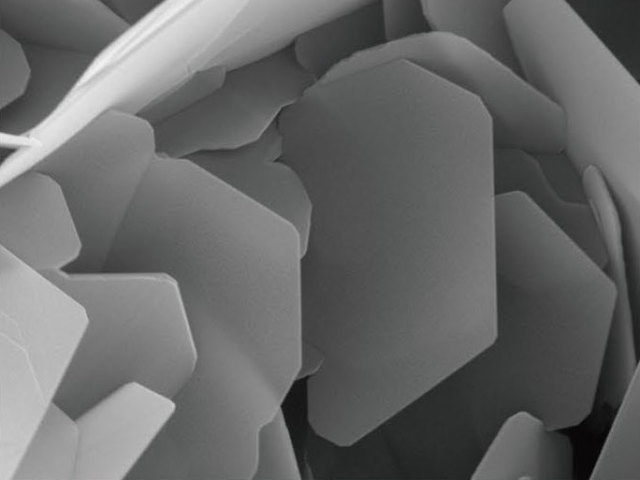
Boron nitride functions as a release agent because of its graphite-like layered structure. The layers slide against one another, the material is soft, and the coefficient of friction is low. Those properties are built into Product 8233 before any applicator touches a mold. What the application method controls is whether that material reaches the surface that actually contacts molten metal, glass, or hot workpieces — and whether it stays there through the run.
In foundry mold release, aluminum and magnesium die casting, glass forming, and crucible coating, failure usually starts at a specific point: a corner, a gate area, an insert, or a radius that the coating did not fully cover. The method of application determines coverage, film consistency, and access. It is therefore a process decision, not a finishing detail.
Boron nitride coatings accounted for the largest application share of the hexagonal boron nitride market in 2024, at 32.8%, according to Grand View Research. That figure describes how widely coating formats are used relative to other BN formats. It does not identify which application method is better for a given die, mold, or crucible.
What BN 8233 Provides Before the Method Question
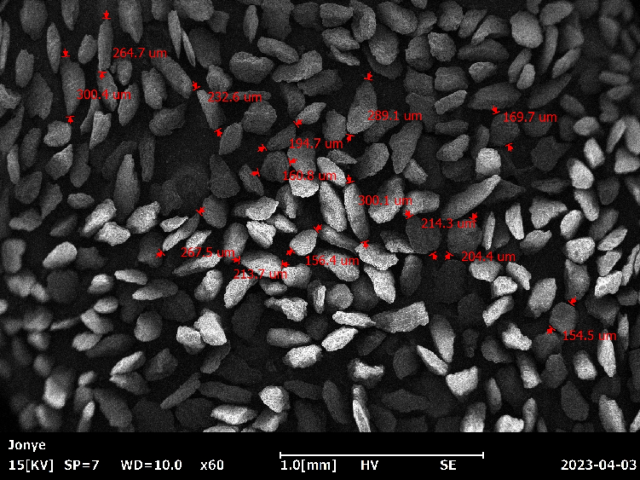
Product 8233 is a boron nitride coating supplied by Sumetech Industry Co., Ltd, a China-based manufacturer of boron nitride and potassium aluminium fluoride products. The product is available in powder, granular, coating, and paint forms. Sumetech lists brush and spraying machine as the two documented application methods, with operation based on actual working conditions.
The material facts that stay constant across both application methods are:
- Thermal stability: up to 900°C in air and over 2000°C in inert atmospheres.
- Release behavior: graphite-like layered structure, soft texture, and low coefficient of friction, functioning as a high-temperature lubricant and release agent that prevents adhesion in metal melting and glass processing.
- Chemical resistance: non-wetting and corrosion-resistant against most molten metals and chemicals.
- Electrical behavior: low dielectric constant and reliable high-temperature electrical insulation, relevant to semiconductor heat dissipation projects.
- Purity: maximum purity of 99.9%.
- Storage: keep dry and sealed, and use before the expiration date.
Sumetech lists 8233 for industries including precision casting, horizontal continuous casting, amorphous ribbon, thermally conductive filler, photovoltaic technology, solar thermal energy storage, semiconductor manufacturing, optical glass, vacuum coating, electronics, military and aerospace, superhard materials, cosmetic additives, functional fibers, and functional ceramics. The application-method question applies to the coating, paint, and release uses inside that list, not to every format.
For context on market scale, Grand View Research values the global hexagonal boron nitride market at USD 949.4 million in 2024, with Asia Pacific holding a 40.6% revenue share and China holding 41.1% of the Asia Pacific total. Those figures describe the category, not the performance of any single product.
Brush Application: Where It Fits and What It Demands
Brush application places 8233 by hand, directly onto the working face. It is the method that prioritizes placement control over coverage speed.
Where brush application fits
- Local repair of a worn or damaged coating on a mold that is already in service.
- Complex mold cavities with deep features, inserts, or small radii that a spray pattern cannot easily reach.
- Small workpieces and low-volume runs where setting up a spraying machine is unnecessary.
- Crucible interior walls and small ladles in metallurgical processing, where the coating must be placed on a specific internal surface.
- High-temperature lubrication points where only a controlled patch of coating is needed.
- Sites without compressed-air infrastructure or spraying equipment.
What brush application demands
- Consistency depends on operator technique. Two operators can produce different film coverage on the same mold.
- Large surface areas take more manual repetition than a spraying machine.
- Very deep or narrow features are limited by the shape of the brush, not by the coating.
- The working condition still governs how the coating is applied, how long it is worked, and how the surface is prepared.
In practice, brush application is common in foundry mold release where only the working face of a large, complex mold needs coverage; in crucible coating where the interior radius is difficult to spray; and in high-temperature demolding where a small, targeted patch is sufficient.
Spraying-Machine Application: Where It Fits and What It Demands
Spraying-machine application distributes 8233 across a surface through a spray pattern. It is the method that prioritizes coverage across large areas and repeatability between batches.
Where spraying-machine application fits
- Large die faces and mold surfaces in aluminum and magnesium die casting, where the whole working face needs coverage.
- Glass forming molds and large foundry molds with open, accessible geometry.
- Repeat production batches where the same coverage pattern must be reproduced run after run.
- Outer surfaces of crucibles, ladles, and large tooling.
- Projects where masking can be planned and overspray can be controlled.
What spraying-machine application demands
- Access to a spraying machine and an air supply.
- Masking of adjacent surfaces that should not receive coating.
- Operator training, because spray pattern, distance, and movement affect consistency.
- Equipment cleaning and maintenance between runs.
- Working-condition-based settings. 8233 operation is based on actual working conditions, and the spray procedure should be confirmed for each project rather than copied from another line.
Spray application does not change the material envelope. A sprayed 8233 coating still delivers thermal stability up to 900°C in air and over 2000°C in inert atmospheres, the same non-wetting behavior against molten metals, and the same low dielectric constant. What changes is coverage, access, and repeatability.
Head-to-Head Comparison: Brush vs. Spray for BN 8233
The table below compares the two methods on criteria that can be judged from the verified 8233 facts and from standard coating practice. It deliberately excludes cost per kilogram, drying time, and cycle time, because those figures are not part of the verified product data for 8233.
| Decision criterion | Brush | Spraying machine | Practical meaning |
|---|---|---|---|
| Best-fit substrate geometry | Complex features, inserts, small radii, localized working faces | Large flat or gently curved surfaces, open geometry | Match the method to how the surface can be reached |
| Coverage area | Small to medium | Medium to large | Line scale decides the method |
| Consistency driver | Operator technique | Equipment settings and spray pattern | Both require a documented procedure |
| Equipment requirement | Hand tools only | Spraying machine with air supply | Check line infrastructure before committing |
| Masking and overspray | Minimal | Requires masking | Review adjacent surfaces and fixtures |
| Reach into deep features | Depends on brush shape | Limited by the spray cone | Local access favors brush |
| Touch-up and repair | Fast and local | Requires re-masking | Brush suits repair work |
| Batch suitability | One-off, localized work | Repeat production | Batch profile decides |
| Thermal envelope | 900°C in air / 2000°C+ in inert | 900°C in air / 2000°C+ in inert | Identical material property |
| Non-wetting and corrosion resistance | Against most molten metals and chemicals | Against most molten metals and chemicals | Identical material property |
| Electrical insulation | Low dielectric constant | Low dielectric constant | Identical material property |
| Recommended project profile | Repair, small, complex | Large, repeat, uniform | No universal winner |
Both methods share the same material properties: thermal stability up to 900°C in air and over 2000°C in inert atmospheres, non-wetting and corrosion resistance against molten metals, and low dielectric constant. The choice between brush and spraying machine changes coverage and access, not the thermal or chemical envelope.
Step-by-Step Decision Framework
The following framework turns the comparison into a repeatable project decision. It is a procedure for applying verified 8233 facts, not a substitute for testing on the actual die or mold.
- Map the substrate geometry and access. Identify the working face, the deep features, the inserts, and the surfaces that must not receive coating.
- Identify the failure mode to prevent. Confirm whether the project is protecting against sticking, molten-metal wetting, corrosion, adhesion in glass processing, or a combination.
- Confirm the thermal environment. Establish whether the project runs in air, where 8233 is stable up to 900°C, or in an inert atmosphere, where the material is stable over 2000°C.
- Match the method to the geometry. Choose brush when the working face is small, feature-rich, or hard to reach. Choose a spraying machine when the face is large, open, and repeated across batches.
- Confirm equipment and masking. A spraying machine needs an air supply and masking of adjacent surfaces. Brush application needs no equipment but needs a documented operator procedure.
- Prepare the surface and the surrounding area. Clean the working face and protect adjacent surfaces according to the project procedure.
- Apply 8233 according to actual working conditions. Do not lift a procedure from a different die, mold, or furnace and assume it transfers unchanged.
- Document the result and store the remainder correctly. Record method, geometry, batch, and release outcome. Keep remaining product dry and sealed, and use it before the expiration date.
Use Cases: Matching Method to Project
Foundry mold release
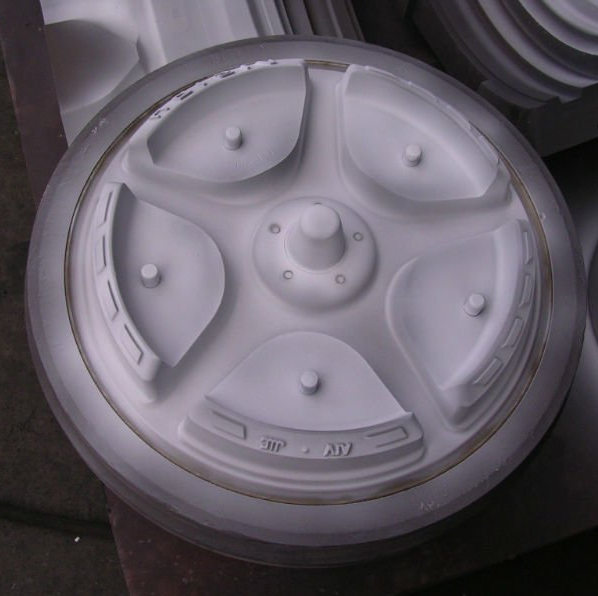
Large foundry molds with deep cavities and inserts often need both methods in sequence: spraying machine for the broad face and brush for the corners, radii, and inserts. Where the mold is small or the work is a repair, brush alone is sufficient. The release function is the same in both cases: 8233 prevents adhesion in metal melting and glass processing through its soft, low-friction layered structure.
Aluminum and magnesium die casting
Die faces in aluminum and magnesium die casting are large and repeated. Spraying-machine application fits the main face, while brush application fits local repair and insert touch-up. The non-wetting and corrosion-resistant behavior against molten metals is a property of the coating, so the method decision rests on coverage and access, not on chemistry.
Glass forming molds
Glass forming requires uniform release across the mold surface. Spraying-machine application supports uniform coverage on open mold faces, while brush application handles touch-up and localized repair. 8233's role in glass processing is release and prevention of adhesion at high temperature.
Crucible coating in metallurgical processing
The interior radius of a crucible is a classic brush case, because the geometry limits spray access. Outer surfaces and larger crucibles can use spraying-machine application. In both cases 8233 provides non-wetting and corrosion resistance against molten metals.
High-temperature lubrication and demolding
Where the target is a specific wear point, guide, or demolding edge, brush application gives placement control. Where the target is a broad tooling face, spraying-machine application gives coverage. In both cases the material functions as a high-temperature lubricant and release agent.
What the Turkey Wheel Hub Case Does and Does Not Tell You
A manufacturer in Turkey used 200 kgs of 8233 over a one-year period for wheel hub demolding. The recorded result was effective prevention of adhesion, attributed to the soft texture and low coefficient of friction of the coating.
The case confirms that 8233's release behavior holds across a production year in a real demolding application. It does not specify whether the manufacturer used brush or spraying-machine application, so it should not be read as a preference for either method. Method choice still depends on the die geometry, the line environment, and the operator's documented procedure.
FAQ: Brush, Spray, and Supply Questions
Is BN 8233 suitable for EU and other regulated industrial markets?
Boron nitride is compliant with EU REACH (Regulation EC 1907/2006) as a substance used in industrial applications. BN 8233 is listed for markets including Germany, France, Italy, Spain, Korea, Japan, Turkey, the United Arab Emirates, Brazil, Bahrain, Russia, Canada, Norway, the United States, Thailand, Vietnam, Malaysia, Indonesia, and Australia. The product should be stored in a dry and sealed environment and used before the expiration date. Buyers should confirm any additional local requirements for their specific process before production use.
What application methods does BN 8233 support, and does the method change coating performance?
BN 8233 can be applied with a brush or a spraying machine, and operation is based on actual working conditions. The coating's thermal stability up to 900°C in air and over 2000°C in inert atmospheres, its non-wetting and corrosion resistance against molten metals, and its low dielectric constant are properties of the material. The application method changes coverage and access, not the thermal or chemical envelope.
What production capacity, MOQ, and lead time apply to BN 8233?
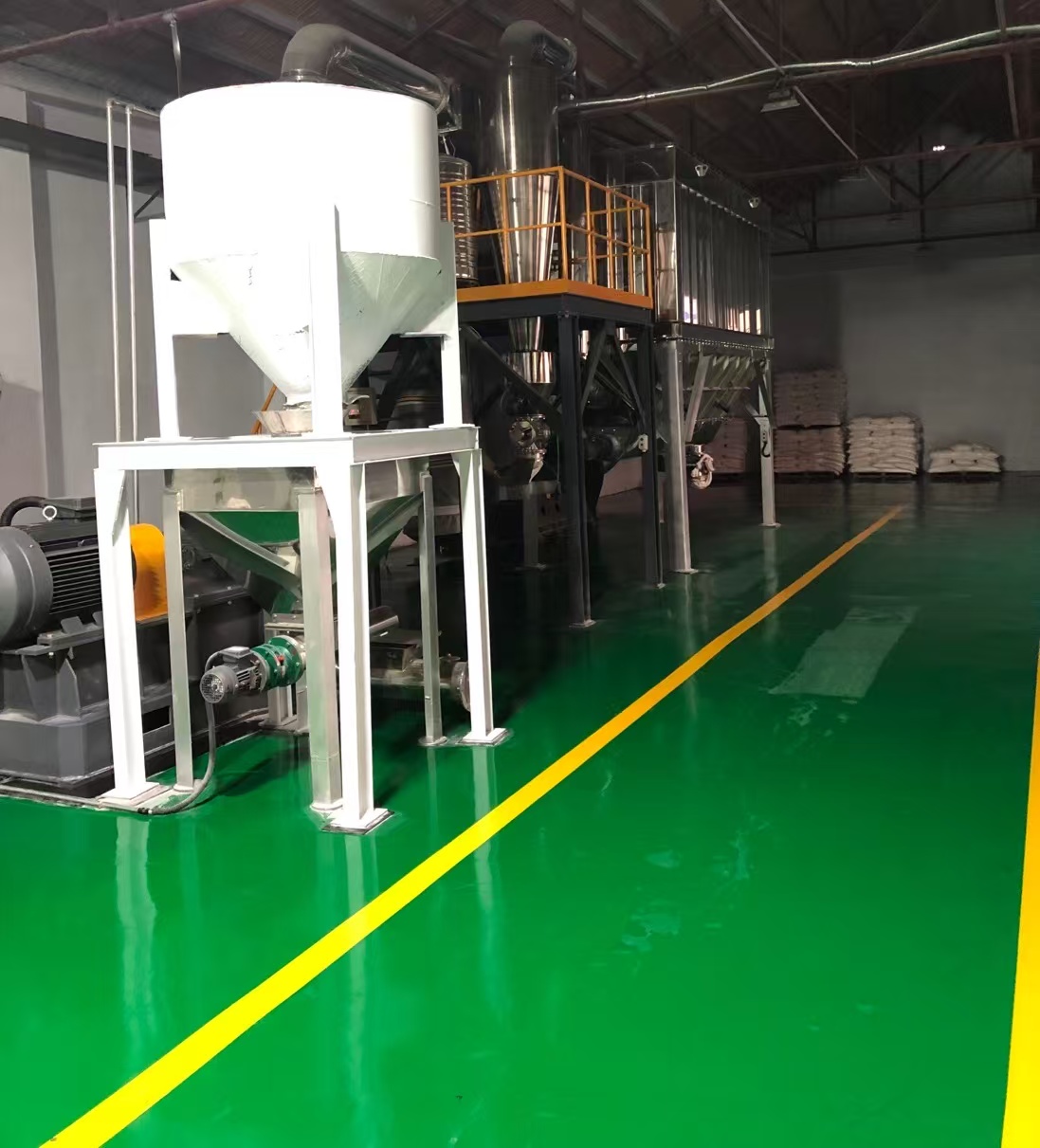
Sumetech Industry Co., Ltd produces BN 8233 with a monthly capacity of 1000 MT and a lead time of 30 days. The minimum order quantity is 10 kgs. Production mode is OEM/ODM, with customization available for size and color. Quality control is 100% test. The company operates a 6000 m² facility, produces 5000 MT annually, exports about 90% of output, and serves markets including Turkey, Japan, Korea, and Europe.
How can an aluminum die caster trial BN 8233 before scaling production?
A trial order can be requested directly from Sumetech Industry Co., Ltd. A relevant reference is the Turkey wheel hub demolding case, where a manufacturer used 200 kgs of 8233 over one year and recorded effective prevention of adhesion, attributed to the coating's soft texture and low coefficient of friction. After-sales support includes remote support and on-site support.
Who supplies BN 8233 for aluminum die casting, and how can a buyer start a technical review?
Sumetech Industry Co., Ltd supplies BN 8233 and lists aluminum and magnesium die casting among the applications served by its boron nitride coating range. The company was founded in 2019, operates a 6000 m² facility with 20 employees and a 5-technician R&D team, and its laboratory has passed CMA and CNAS accreditation. To start a technical review of brush versus spray for a specific die, contact Mike Meng at info@sumetech.com or +86 13805218959, and download the Sumetech 2026 catalog at https://cdn.socialarks.com/sbsp/25245/common/2026/0831/Catalog%20of%20Sumetech-2026.pdf.
Conclusion
The brush-versus-spray decision for Boron Nitride 8233 is not a contest between a better and a worse method. It is a match between method and project profile:
- Choose brush when the working face is small, complex, hard to reach, or being repaired in place.
- Choose a spraying machine when the surface is large, open, repeated across batches, and needs consistent coverage.
- Expect the same material envelope either way: 900°C in air, over 2000°C in inert atmospheres, non-wetting and corrosion resistance against molten metals, low dielectric constant, and up to 99.9% purity.
- Confirm the procedure against actual working conditions, and keep the product dry and sealed before use.
The Turkey wheel hub demolding case shows that 8233 performs in a production release application across a year of use. It does not settle the method question, because the method was not specified. The settlement comes from the die geometry, the thermal environment, and the release requirement of the individual project.
Need help choosing brush or spray for a specific die or mold?
Send the working-face geometry, the thermal environment (air or inert), and the release requirement to Sumetech Industry Co., Ltd. The technical team can review whether brush, spraying machine, or a combination fits the project, and can discuss trial quantities from the 10 kg minimum order.
Contact: Mike Meng · info@sumetech.com · +86 13805218959 · WhatsApp
Have Questions or Need More Details?
Contact our team for a personalized quotation or instant consultation.
Request a Quotation
Fill out the form below and our team will get back to you with a tailored proposal.
WhatsApp Direct Chat
Prefer to chat in real-time? Message us on WhatsApp for instant assistance & quick answers.
- Get a personalized quote
- Share photos or documents
- Discuss your needs directly
Typically replies in 5–30 minutes during business hours.