
PAF Particle Size and Purity Selection for Abrasive Wheels
Choosing the right potassium aluminium fluoride (PAF) for an abrasive wheel comes down to two specification decisions: the purity class — white high-purity PAF or grey industrial-grade PAF — and the particle size distribution — mesh 200 powder, 0.3–1.0 mm granular, or 0.5–1.5 mm granular. Both decisions follow from one function: PAF must work as an active filler inside the bond, improving adhesion between the abrasive grains and the binder while managing the heat generated in the grinding arc.
Potassium aluminium fluoride is a potassium fluoroaluminate with the formula KAlF4 (the potassium-rich form is written K3AlF6). Its CAS number is 60304-36-1 and its molecular weight is approximately 142.07 g/mol. In abrasive and metallurgical trade it is supplied as a white or grey powder, granular product or lump, and it is commonly classified under HS code 38101090 alongside metal-surface pickling preparations and fluxes.
The reason the grade decision deserves careful engineering is simple: “PAF” on a purchase order does not define a product. White and grey material differ in purity class and colour. Powder, granular and lump differ in how they flow and disperse in a mixing machine. Even two sieve cuts inside the same nominal range can behave differently in the same hot press. This guide sets out the parameters that actually control performance, the equipment those parameters have to match, and the verification steps that keep a wheel program stable over years of supply.
Why “PAF” Alone Is Not a Usable Specification
The most common PAF problem in grinding wheel production is not a bad supplier — it is an incomplete specification. When a purchase order asks only for “potassium aluminium fluoride powder”, the delivered material can legitimately be a milled off-cut of a 0.3–1.0 mm granular batch, a wide-distribution powder with a high fines fraction, or a grey industrial grade where white material was expected. Each of those is normal PAF. None of them behaves the same way in the bond.
Three symptoms appear on the wheel line when purity or particle size drifts out of specification:
- Thermal damage on the workpiece. If the filler cannot absorb grinding heat reliably, the grinding arc runs hotter, and burning, discoloration and deformation become more likely on heat-sensitive alloys.
- Loss of grain retention. The active filler is what reinforces the bond-to-grain interface. A lower or inconsistent filler contribution means abrasive grains release before they have done their work, and wheel strength and service life suffer.
- Glazing, loading and unpredictable wheel life. Self-sharpening and anti-clogging behaviour depend on the filler acting consistently from batch to batch. When it does not, wheels stop cutting freely and the operator compensates with pressure, which makes the thermal problem worse.
None of these symptoms mean that PAF “does not work”. They mean PAF was not specified along the two dimensions that control its behaviour in the bond: purity and particle size.
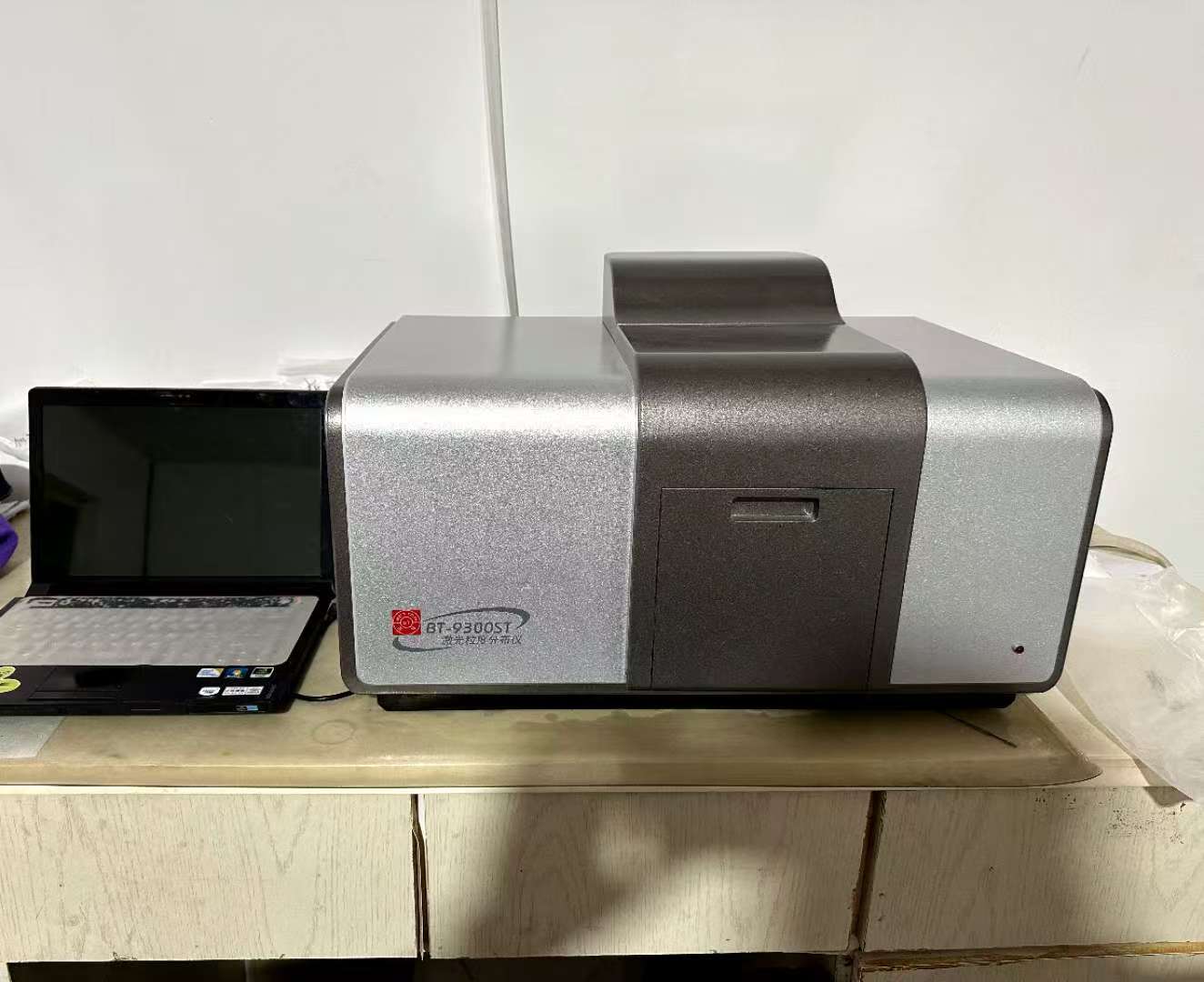
Particle size analysis is the control point between a nominal PAF size label and a repeatable sieve cut.
Industry Background: A Well-Defined Market, a Loosely Defined Product
Potassium aluminium fluoride is a mature industrial chemical with a stable demand base. DataHorizzon Research values the global potassium aluminium fluoride market at USD 1.76 billion in 2024 and projects USD 2.62 billion by 2033, equivalent to a 4.8% compound annual growth rate across 2025–2033. Demand is anchored in electrolytic aluminium smelting, where PAF acts as a core flux, and spreads outward into aluminium brazing — including battery water-cooling plates and air-conditioning radiators for new energy vehicles — ceramics and glass manufacturing, non-ferrous metal recycling and casting, and the abrasive and grinding wheel industry, where PAF serves as an active filler.
The supply side, however, is less standardised than the demand side. Industry practice maps industrial grade PAF at 98% minimum with foundry and abrasive applications, normally delivered as grey material, while high purity grades above 99% — usually supplied as white PAF — are required for brazing and specialty glass. Because both classes can be described simply as “potassium aluminium fluoride”, the purity class is exactly where specifications and delivered goods drift apart.
Two practical consequences follow for wheel manufacturers. First, the purity class should be chosen against the wheel’s thermal and surface requirements rather than against unit price alone. Second, because the market is growing steadily rather than exploding, the durable advantage for a buyer lies in supply consistency and specification discipline, not in chasing the lowest quotation in any given quarter.
How PAF Behaves as an Active Filler Inside a Grinding Wheel
PAF is not a bulking filler. It melts in the grinding zone — around 560 °C, with behaviour reported in the 557–580 °C range — and that phase change is the origin of five working mechanisms that together explain why it improves grinding efficiency and wheel life.
Heat absorption and burn prevention
PAF melts before most of the surrounding bond system reacts, absorbing a substantial share of the grinding heat like a micro heat sink. The working result is a cooler grinding arc, which reduces the risk of burn marks, discoloration and deformation on the workpiece.
Stronger adhesion between bond and abrasive grain
As an active filler, PAF significantly improves the adhesion between the bond and the abrasive grains. Grains that are held more firmly produce a stronger wheel and a noticeably longer service life, because the wheel wears through controlled grain release rather than through grain loss.
Heat dissipation and slower resin aging
PAF also has good thermal stability at elevated temperature, so it helps conduct heat away from the wheel surface. Slower resin aging means the wheel stays closer to its designed hardness for longer, instead of hardening or breaking down ahead of schedule.
Self-sharpening control
Self-sharpening is a timing problem: dull grains must leave the bond at the right moment, and fresh sharp grains must emerge promptly. PAF supports that cycle, which keeps the wheel cutting freely rather than glazing over.
Anti-clogging behaviour and chip flow
Finally, PAF reduces the adhesion of grinding debris to the wheel surface. Even during prolonged operation the wheel stays cleaner, which keeps grinding efficiency consistent instead of decaying through the shift.
Taken together, these five mechanisms are why PAF is treated as a performance enhancer rather than an inert additive. They are also why the grade decision matters: a filler that melts at the right moment in the arc but is distributed unevenly through the bond cannot deliver any of these effects consistently.
Selecting the Purity Grade
Two purity classes dominate PAF supply into the abrasives industry, and the choice between them is a technical decision, not purely a commercial one.
Grey industrial-grade PAF is commonly specified at 98% minimum and is the class normally associated with foundry and abrasive applications. It is the cost-efficient route for wheels where the filler’s job is thermal management and adhesion support, and where the colour of the raw material is irrelevant to the finished product.
White high-purity PAF moves the specification up. Sumetech Industry Co., Ltd states that its white PAF has a purity above 99.5% with a pure white colour. Higher purity means fewer foreign phases in the filler, which matters when the bond system is sensitive to contamination, when the wheel specification is tight on thermal behaviour, or when the downstream process requires a clean, white raw material. Both white and grey grades are produced for the abrasives and grinding wheel industry, where the material acts as an active filler that enhances the adhesion between abrasives and binders and improves grinding efficiency and wheel life.
A practical decision rule: start from the wheel’s function. If the wheel is a general-purpose resin-bonded product where heat management and grain retention are the main requirements, industrial-grade grey material is typically sufficient. If the wheel runs in a demanding thermal regime, or the process cannot tolerate contamination, high-purity white material is the defensible choice — and it should be written into the specification by purity class and colour, not by brand shorthand.
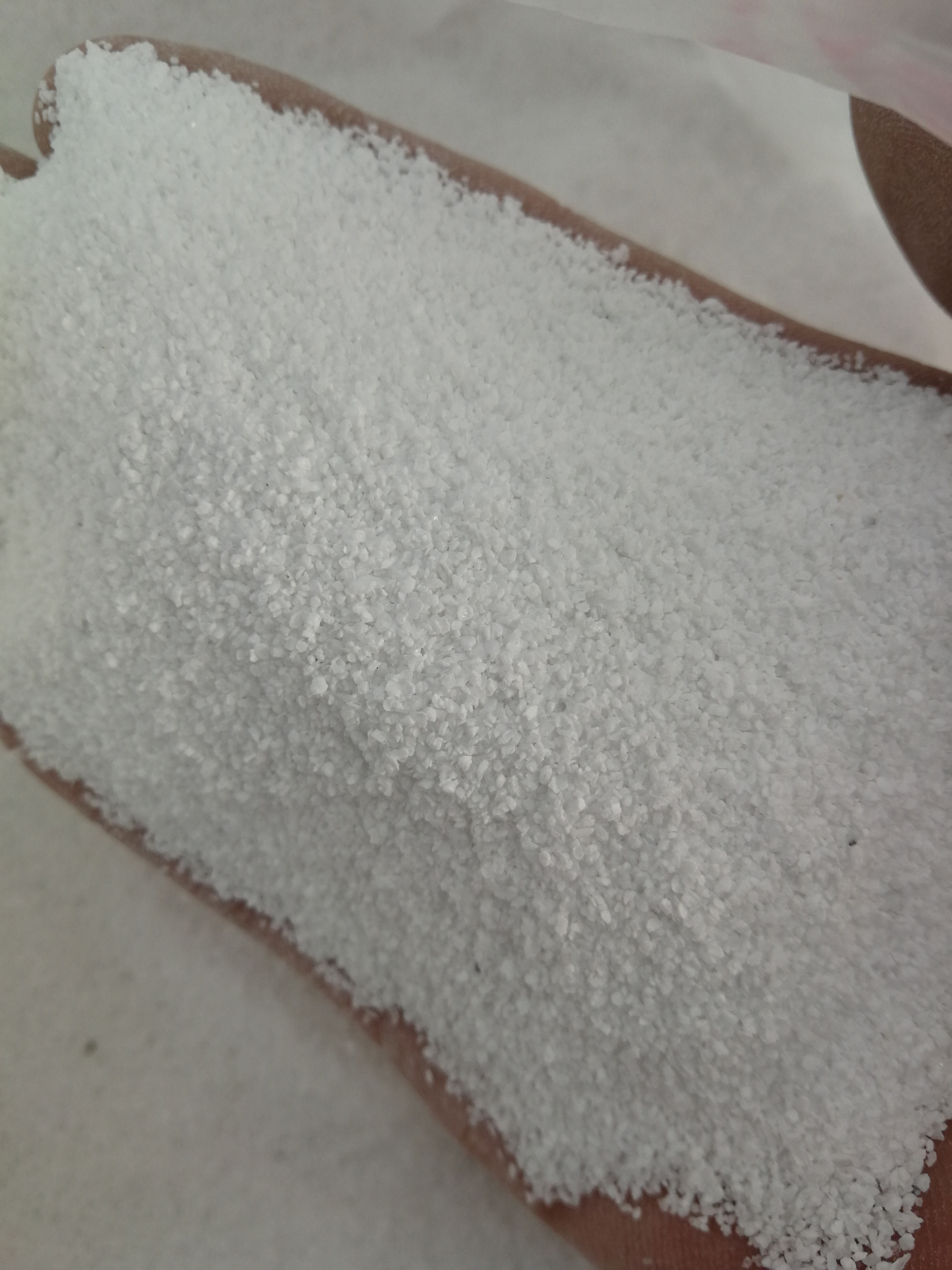
White high-purity potassium aluminium fluoride in granular form — colour is a visible grade marker at goods-in inspection.
Selecting the Particle Size Distribution
Three standard size specifications are produced for PAF: mesh 200, 0.3–1.0 mm and 0.5–1.5 mm. The available forms are powder, granular and lump, and the available colours are white and grey. Lump material is the feedstock that is milled, crushed, shaped and classified into the powder and granular cuts, which is why lump is normally bought by processors rather than by wheel mixers.
- Mesh 200 powder. The finest standard cut, with the highest surface area and the fastest dispersion in a mixing machine. It suits bond formulations that need the filler distributed uniformly through the mix and that can tolerate a fine powder in handling. Fine cuts also demand tighter dust control during weighing and mixing.
- 0.3–1.0 mm granular. A free-flowing granular cut with a moderately narrow window. It blends predictably, resists segregation in storage and feed systems, and is the natural starting point for many resin-bonded wheel programs.
- 0.5–1.5 mm granular. The coarser standard cut, used where a larger filler particle is compatible with the bond structure and the mixing line is set up for coarser granule handling. Because the window is wider, the distribution around the nominal range is what determines batch-to-batch consistency.
Colour and size are independent variables. White and grey PAF are both produced in powder and granular form, so a wheel program can pair the purity class it needs with the sieve cut its mixing line can handle, rather than compromising one for the other.
The point buyers most often miss is that a nominal size is not a distribution. Two deliveries labelled “0.3–1.0 mm” can differ in the proportion of fines and oversize material, and that difference shows up in the press, not on the certificate of analysis alone. Narrow particle size distributions with minimal impurities are produced through sieving and classification, which is why the classification step matters as much as the milling step.
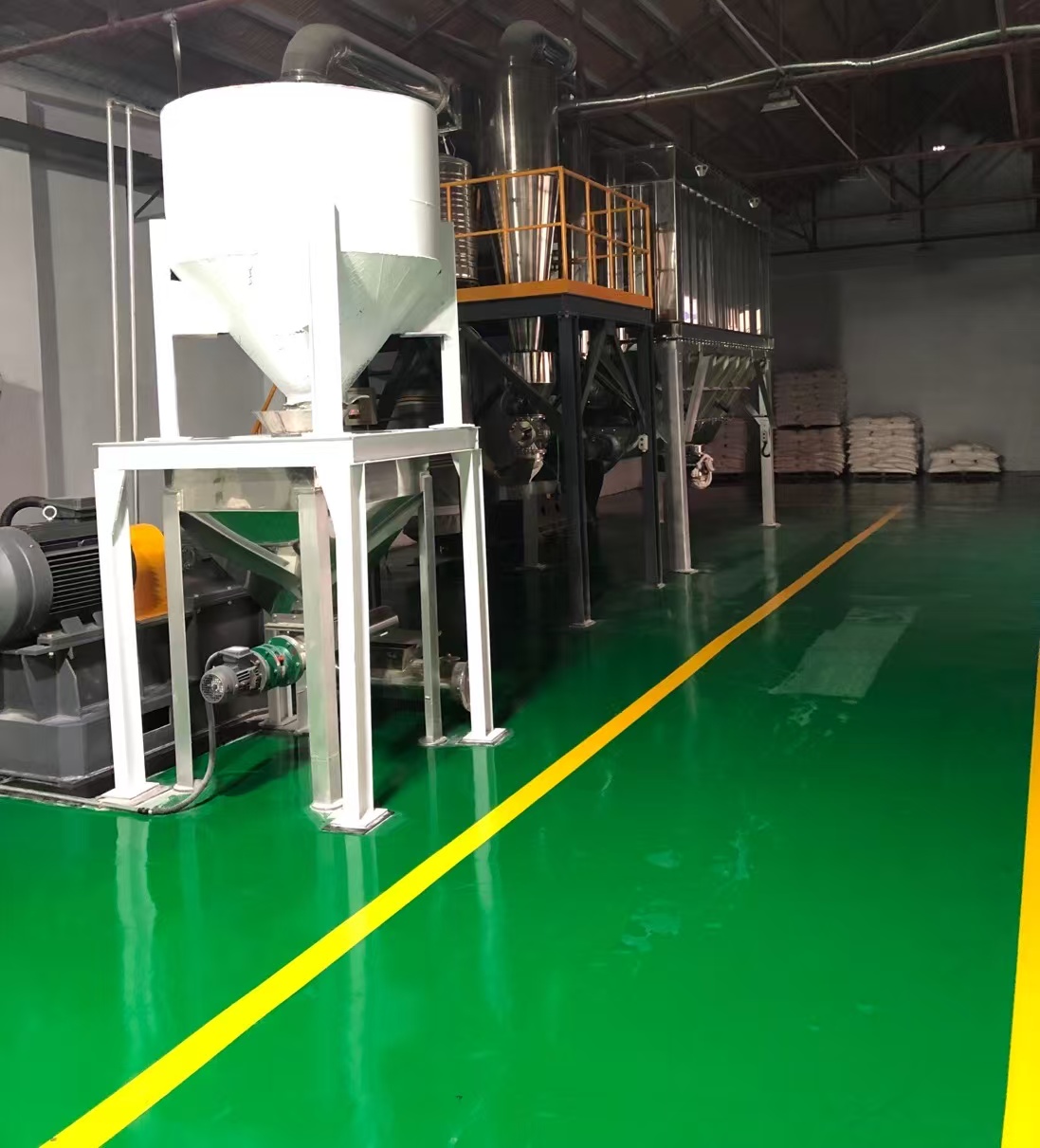
Sieving and classification determine the fines and oversize fractions within a nominal PAF size range.
Equipment and Working-Condition Dependence
PAF selection cannot be completed on paper. The matched production equipment for abrasive applications is a mixing machine, a hot press molding die and a curing oven, and each one imposes a constraint on the grade decision.
- Mixing machine. A fine mesh 200 powder disperses quickly but can dust and segregate; a coarse granular cut blends more slowly but flows more predictably. The mixer’s shear and cycle time determine which distribution actually reaches the bond uniformly.
- Hot press molding die. The die cavity geometry and press cycle define how much green strength the mix must develop and how evenly the filler must be distributed before curing begins.
- Curing oven. The cure profile defines how much thermal protection the resin needs during curing and, later, in the grinding arc. This is where purity class and melting behaviour interact with wheel hardness.
Because these variables differ from plant to plant, the final selection operates subject to actual working conditions rather than to a single universal recommendation. The same wheel specification run on two lines with different press cycles or cure profiles may need different PAF grades to reach the same result. That is precisely why supplier-side process control matters: mills for particle size control, crusher and shaping machines for consistent granular shape and flowability, and sieving and classification systems for narrow distributions are what allow a supplier to reproduce a validated grade rather than approximate it.
One storage rule applies to every grade: PAF should be stored in a dry, well-ventilated place. Moisture pick-up changes flow behaviour and, in fine powders, can cause caking that undoes the benefit of a narrow distribution.
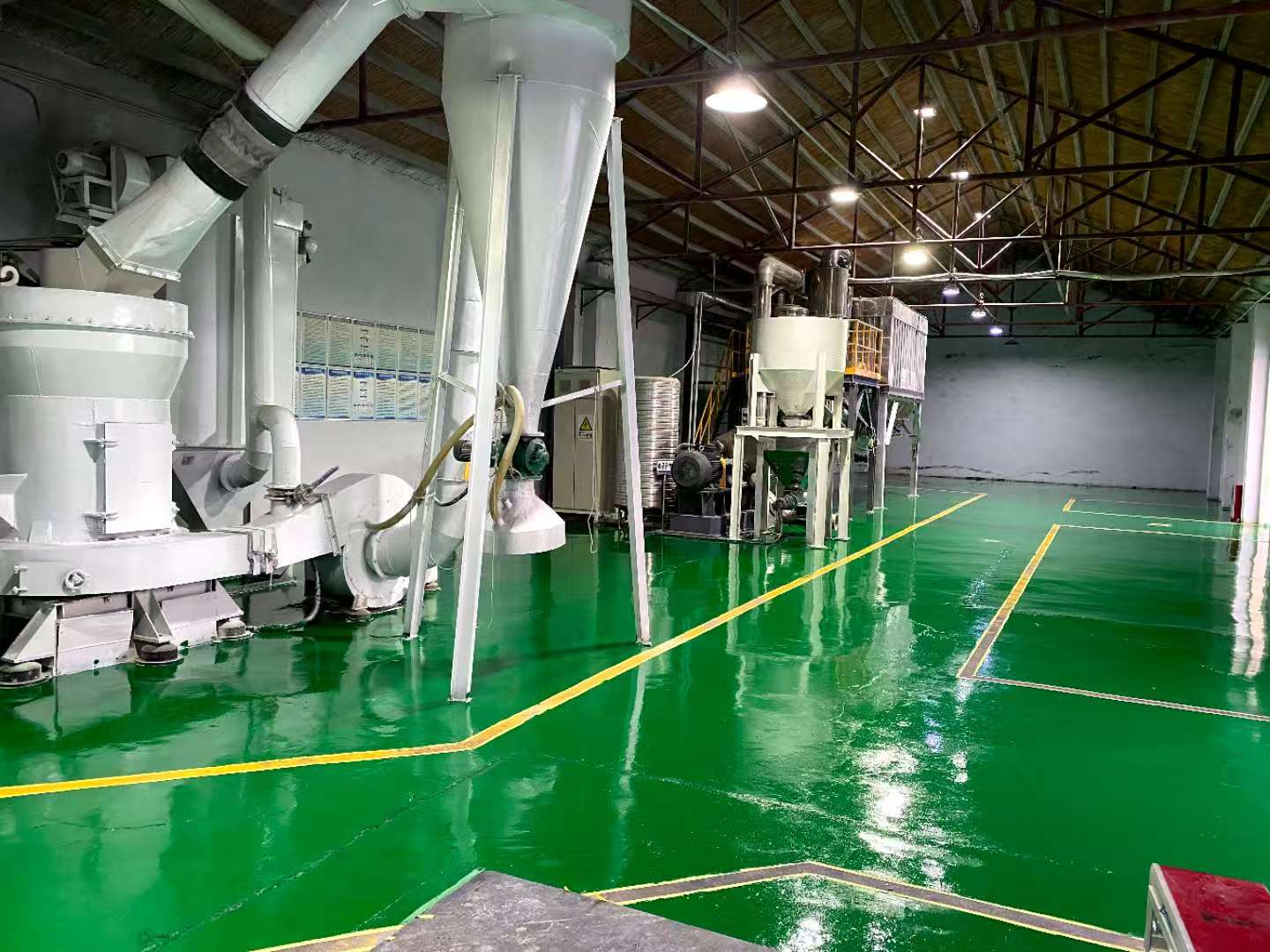
Milling and shaping equipment is what makes a specified PAF particle size reproducible batch after batch.
Step-by-Step: Specifying PAF for a Wheel Program
The sequence below converts the technical discussion above into a purchasing workflow that can be repeated for every wheel family.
Step 1 — Define the filler’s job in the wheel. Decide whether the priority is thermal management, grain retention, or both. This determines how much weight the purity class carries in the specification.
Step 2 — Fix the purity class in writing. State the class explicitly — grey industrial grade or white high purity — and state the colour. If high purity is required, write the purity threshold into the specification so substitution cannot happen silently.
Step 3 — Fix the particle size window, not just the nominal size. Choose between mesh 200, 0.3–1.0 mm and 0.5–1.5 mm, and require a narrow distribution inside that window. Nominal ranges alone do not control fines content.
Step 4 — Confirm the supplier’s distribution capability. Production control for PAF relies on mills for particle size control, crusher and shaping machines for granular shape and flowability, and sieving and classification systems for narrow distributions. This equipment is what makes a validated grade reproducible.
Step 5 — Validate against the real line. Run the candidate grade through the actual mixing machine, hot press molding die and curing oven. Results depend on the working conditions of that line, so a laboratory result from a different process is only directional.
Step 6 — Convert the validated grade into acceptance criteria. Use pre-shipment test results as the acceptance criterion, and define delivery and payment structure in the agreement. Standard purchasing terms are MOQ 1 MT, delivery terms FOB, CIF or FCA, acceptance criteria based on pre-shipment test, and 30/70 payment terms.
Step 7 — Protect supply continuity. For a long-term program, confirm that the supplier holds raw material inventory on site for uninterrupted year-round production, can respond to urgent orders with short lead times, and can scale output for large-volume project demand.
Use Cases
Resin-bonded cutting and grinding wheels
This is the core abrasive application. PAF acts as the active filler that enhances adhesion between the abrasive grains and the binder, improving grinding efficiency and wheel life. A program here typically starts with a granular cut such as 0.3–1.0 mm and shifts toward mesh 200 powder only when the bond formulation and the mixing line can handle a finer distribution.
Wheels where surface quality and thermal limits dominate
When the workpiece is heat-sensitive or the process cannot tolerate contamination from the raw material, the specification moves to white high-purity PAF. In these programs the colour of the raw material is a useful grade-identity marker, because an unintended substitution becomes visible immediately at goods-in inspection.
Plants running abrasives and aluminium casting side by side
Many manufacturers in the aluminium supply chain operate a casting or foundry operation alongside abrasive production. For these plants, a single qualified PAF supplier covering grey material for casting and flux duties plus white or grey material for wheel production reduces the number of grades, contracts and incoming inspections the plant has to manage. That is the logic behind long-term PAF supply agreements for aluminium casting and abrasives: the value is not one shipment, it is the reduction of variation across the plant.
Comparison Table
The tables below summarise the decision logic. Values reflect standard product specifications and commonly published industry purity-to-application mapping.
| Purity class | Typical specification | Colour | Typical fit | Meaning for wheel production |
|---|---|---|---|---|
| Grey industrial grade | 98% min (industry mapping) | Grey | Foundry and abrasive applications | Cost-efficient filler for thermal management and grain retention; colour irrelevant to the finished wheel |
| White high purity | Above 99.5% (white PAF) | Pure white | Demanding thermal regimes and contamination-sensitive bonds | Fewer foreign phases; also a visible grade-identity marker at goods-in |
| Grade & form | Size | Role in wheel production | Handling note |
|---|---|---|---|
| Powder | Mesh 200 | Fastest dispersion; uniform distribution in fine bond formulations | Highest surface area; requires dust control during weighing and mixing |
| Granular | 0.3–1.0 mm | Predictable blending; common starting point for resin-bonded wheel programs | Free-flowing; resists segregation in feed systems |
| Granular | 0.5–1.5 mm | Coarser filler for bonds built around a larger particle | Wider window; distribution control determines batch consistency |
| Lump | Bulk lumps | Feedstock for milling, crushing, shaping and classification | Bought by processors rather than by wheel mixers |
| Colour options | White / grey | Independent of particle size — pair purity class with the required sieve cut | Confirm both variables in writing on the purchase order |
FAQ
What should a grinding wheel producer verify before locking in a long-term PAF supplier?
Four things. First, the material identity: potassium aluminium fluoride, KAlF4, CAS 60304-36-1, molecular weight approximately 142.07 g/mol. Second, the purity class stated in writing — white PAF is stated at above 99.5% purity with a pure white colour, while industrial grade material used for foundry and abrasive applications is commonly specified at 98% minimum. Third, the acceptance route: pre-shipment test results used as the acceptance criterion. Fourth, hazard and storage handling: PAF is classified as GHS Acute Toxicity Category 4 (oral, dermal, inhalation) and Skin Irritation Category 2 under OSHA HCS 29 CFR 1910, and it should be stored in a dry, well-ventilated place. For customs and trade documentation, the material is commonly traded under HS code 38101090.
Can particle size distribution, form and purity be customized to our bond system?
Yes. Customization covers particle size distribution from coarse granules down to sub-micron powders, morphology in angular, spherical or crushed shapes, purity grades, and packaging specifications. The standard size specifications are mesh 200, 0.3–1.0 mm and 0.5–1.5 mm, available as white or grey material in powder, granular or lump form. These cuts are produced with mills for particle size control, crusher and shaping machines for consistent granular shape and flowability, and sieving and classification systems for narrow particle size distributions with minimal impurities — the equipment base that makes a customized specification repeatable rather than one-off.
What are the purchasing terms, and which cost factors actually matter?
Standard purchasing terms are MOQ 1 MT, delivery terms FOB, CIF or FCA, acceptance criteria based on pre-shipment test, and 30/70 payment terms. On cost, the relevant question is cost per finished wheel rather than cost per kilogram of PAF: purity class and distribution consistency drive wheel life, scrap rate and rework, and those usually outweigh a small difference in filler price. For directional feedstock pricing, the nearest published benchmark is related aluminium fluoride (AlF3), which reached 1.80 USD/kg in Northeast Asia in March 2026, up 6.5% from the fourth quarter of 2025 according to IMARC Group — a signal of input-cost direction, not a PAF quotation.
Can we validate a grade with a trial before committing to a long-term agreement?
Yes — both trial lots and full container shipments are supported, which allows a wheel producer to validate a candidate grade before scaling. The recommended sequence is to define the filler’s function, order the specific purity class and sieve cut as a trial lot, run it through the actual mixing machine, hot press molding die and curing oven, and then write the validated specification into the acceptance criteria of the supply agreement. Because performance is subject to actual working conditions, validation on the production line — not only on a specification sheet — is what makes the trial meaningful.
How is supply continuity secured for a long-term PAF program?
Supply continuity rests on inventory and throughput rather than on promises. Large raw material inventories are held on site, which supports uninterrupted production year-round, fast response to urgent orders, and the ability to scale output quickly for large-volume project demand. The production base covers 6,000 m² with an annual output of 5,000 MT, supported by a technical team of 5 engineers, and approximately 90% of production is exported, with main markets in Turkey, Japan, Korea and Europe. For plants that run casting operations alongside wheel production, this is the basis of a single-supplier, multi-grade program: one qualified source for potassium aluminium fluoride across the plant, rather than separate contracts for each application. To review the full grade list, download the Sumetech product catalog, or send the wheel specification and required sieve cut directly to the technical team at info@sumetech.com for a grade recommendation.
Conclusion
Specifying PAF for abrasive wheels is a two-variable problem. The purity class determines how clean and how thermally consistent the filler is — grey industrial grade at 98% minimum for standard foundry and abrasive duty, or white high-purity material above 99.5% where the wheel runs hot or the bond cannot tolerate contamination. The particle size distribution determines how the filler behaves in the mixing machine, the hot press and the curing oven — mesh 200 powder for fast dispersion, 0.3–1.0 mm or 0.5–1.5 mm granular for predictable blending and flow.
Get those two variables right, confirm them with pre-shipment testing, and validate them on the actual production line, and the five active-filler mechanisms — heat absorption, bond-to-grain adhesion, heat dissipation, self-sharpening and anti-clogging — work as designed. Get them wrong, and no supplier change will fix the wheel.
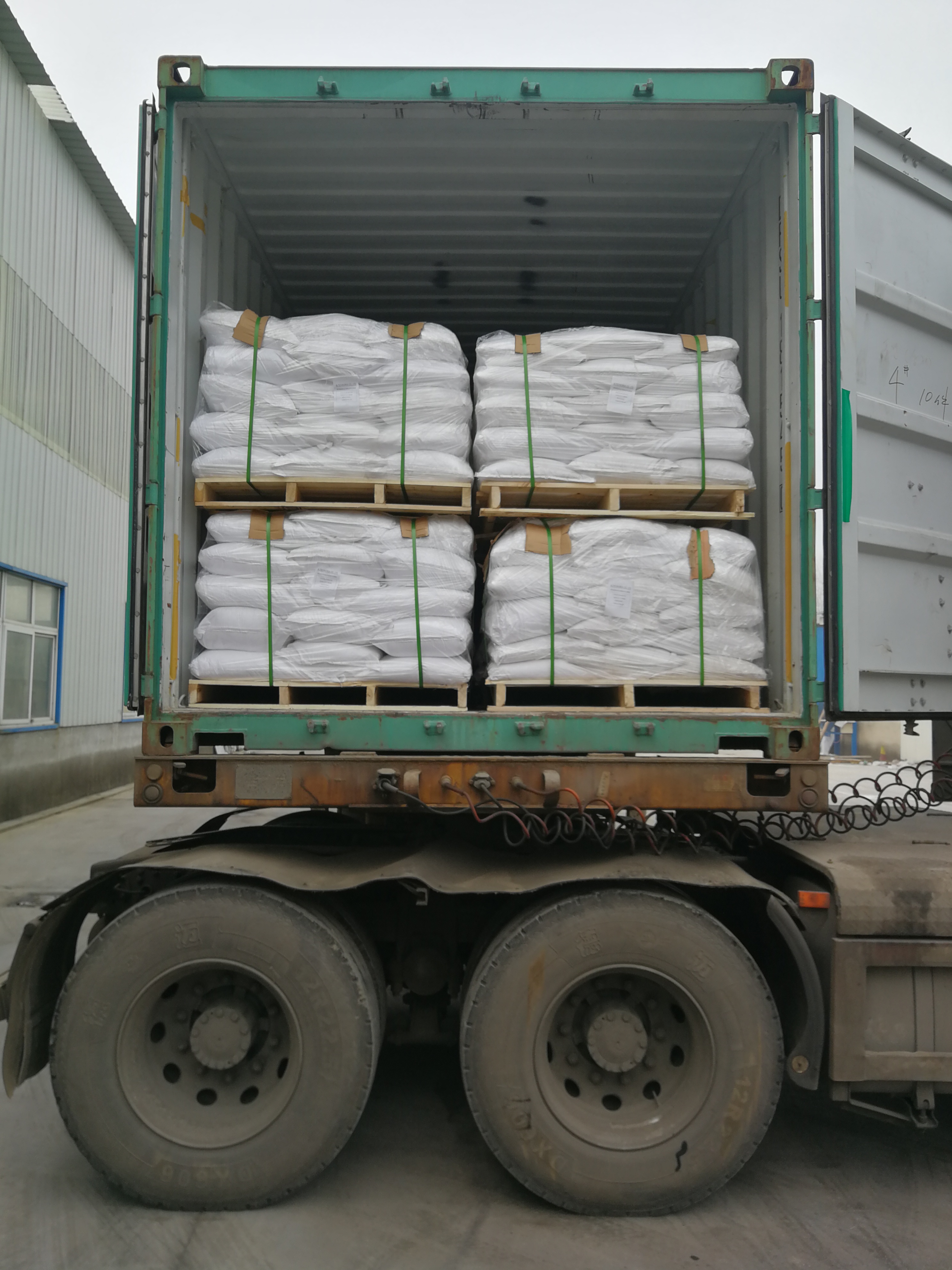
Qualified PAF grades shipped in ton bags and containers for long-term wheel and casting programs.
About Sumetech Industry Co., Ltd
Sumetech Industry Co., Ltd is a manufacturer of potassium aluminium fluoride (PAF) and boron nitride based in Xuzhou, China. The company operates a 6,000 m² production facility with an annual output of 5,000 MT, supported by a technical team of 5 engineers, and exports approximately 90% of its production to markets including Turkey, Japan, Korea and Europe. PAF is supplied as white or grey material in powder, granular and lump form, with customizable particle size distribution, morphology, purity grade and packaging.
Product catalog: Catalog of Sumetech 2026 (PDF)
Website: www.sumetech.com
Email: info@sumetech.com | Tel / WhatsApp: +86 13805218959
Have Questions or Need More Details?
Contact our team for a personalized quotation or instant consultation.
Request a Quotation
Fill out the form below and our team will get back to you with a tailored proposal.
WhatsApp Direct Chat
Prefer to chat in real-time? Message us on WhatsApp for instant assistance & quick answers.
- Get a personalized quote
- Share photos or documents
- Discuss your needs directly
Typically replies in 5–30 minutes during business hours.