
Molten Aluminum Sticking to Your Die? A Boron Nitride Release Strategy for Die Casters
Short answer: molten aluminum sticking to a die is a wetting problem, and boron nitride is a release material that resists wetting at casting temperature. Sumetech Industry Co., Ltd supplies boron nitride as Product 8233 in powder, granular, coating, and paint form, rated for a maximum working temperature of 900 °C in air and over 2000 °C in an inert atmosphere, with purity up to 99.9%. It is chemically inert, non-wetting, and corrosion-resistant against molten metals, it is applied with a brush or a spraying machine, and it must be stored dry and sealed and used before its expiration date.
This article is written for die casting engineers, foundry process owners, and procurement teams who have already established that boron nitride is relevant and now need a narrower answer: does a BN coating actually stop adhesion in an aluminum die casting cell, which grade should be specified, how is it applied, and what has to be true about drying, storage, and validation before it is written into a process sheet?
Why molten aluminum sticks to a die — and why the fix is a release coating
Inside a die casting cell, molten alloy and tool steel meet under pressure, cycle after cycle. Where the alloy wets the tool surface instead of rejecting it, metal clings: parts tear at ejection, surface finish degrades, and the die is pulled out of the loop for manual cleaning instead of continuing to run. Cleaning addresses the symptom; it does not change the interface chemistry that caused the sticking in the first place.
A durable boron nitride release strategy has to satisfy four conditions at the same time:
- Non-wetting behaviour. The coating must repel molten metal rather than absorb or bond with it.
- Chemical inertness. It must not react with, dissolve in, or contaminate the alloy.
- Thermal stability. It must survive the temperature of the casting environment without breaking down.
- Application fit. It must be possible to apply, dry, and store it inside the routines of a working foundry.
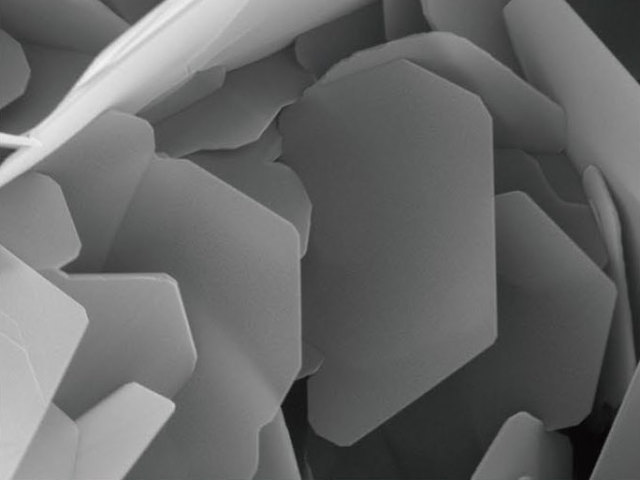
Boron nitride satisfies all four, which is why it appears repeatedly in high-temperature release applications. Hexagonal boron nitride (h-BN) has a layered crystal structure similar to graphite: atoms are covalently bonded within each layer, and the layers interact through van der Waals forces. That structure is the origin of the nickname ‘white graphite’ and of the material’s soft, low-friction surface, which molten metal does not readily wet.
For a die caster, the practical consequence is simple. A boron nitride anti-stick coating on tooling works as a release layer rather than as a lubricating additive: it separates the alloy from the steel, so the part leaves the cavity instead of pulling material with it.
Industry background: where boron nitride release chemistry is growing
Hexagonal boron nitride is not a laboratory curiosity. Grand View Research values the global h-BN market at USD 949.4 million in 2024, with Asia Pacific holding a 40.6% revenue share that year and China alone accounting for 41.1% of the Asia Pacific total. Within that market, paint-and-coating applications were the largest single application segment in 2024 at a 32.8% share — a useful signal for anyone specifying a boron nitride ceramic coating rather than a bulk powder.
Published estimates for the coating segment specifically are larger and considerably less consistent. One commercial research source values the global boron nitride coatings market at USD 2.8 billion in 2025. That number should be treated as directional rather than decision-grade: published BN market figures differ by orders of magnitude depending on whether the scope covers BN powder, BN coatings, or all boron-based chemicals. For a procurement decision, your own application data outweighs any headline market size.
Two regulatory and trade facts matter when boron nitride coating for die casting operations crosses a border:
- Boron nitride is compliant with EU REACH (Regulation EC 1907/2006) as a substance used in industrial applications.
- Boron nitride coating is commonly traded under HS code 28500020 for import and export declarations.
On the supply side, Sumetech Industry Co., Ltd is a China-based manufacturer of metal smelting and casting auxiliary materials — including potassium aluminium fluoride and boron nitride — founded in 2019, operating a 6,000 m² facility with 20 employees, an annual output of 5,000 MT, and five technicians in R&D and quality control. Around 90% of output is exported, with main markets including Turkey, Japan, Korea, and Europe.
Foundry mold release coating practice already reflects this: boron nitride coatings are applied to molds, troughs, and ladles for aluminum, magnesium, and zinc alloys to support easy release, longer tool life, and better casting surface quality, and they are used in glass forming, sintering and heat treatment, aerospace, semiconductor, and automotive manufacturing. Aluminum die casting sits squarely inside that field of use.
The solution: what boron nitride (Product 8233) does at the die surface
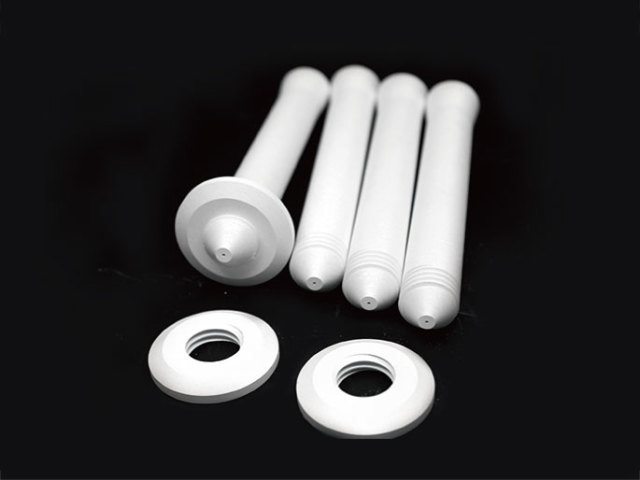
Sumetech supplies boron nitride as Product 8233 in powder, granular, coating, and paint form, covering boron nitride ceramic, boron nitride coating, boron nitride fiber, and boron nitride painting. Its documented technical limits and release-relevant properties are what make it a specification item rather than a commodity powder.
Non-wetting and corrosion resistance against molten metal
The defining property for a die caster is that boron nitride is chemically inert, non-wetting, and corrosion-resistant against most molten metals and chemicals. In precision casting terms, Product 8233 provides non-wetting and corrosion resistance against molten metals and acts as a release agent for metalworking tool manufacturing. Practically, the film does not bond to the aluminum or magnesium it contacts and does not consume itself by reacting with the alloy, which is what allows it to keep working as a release layer instead of becoming part of the casting surface.
The same inertness is why boron nitride functions as a high-temperature lubricant and release agent preventing adhesion in metal melting and glass processing. Materials that react with molten aluminum cannot deliver that behaviour repeatedly, regardless of how they are applied.
Thermal stability: 900 °C in air, over 2000 °C in inert gas
Product 8233 is rated for a maximum working temperature of 900 °C in air and over 2000 °C in an inert atmosphere, with maximum purity of 99.9%. Descriptions of h-BN as stable to nearly 3000 °C refer to protective conditions; for a coating running in air in a casting cell, the 900 °C air rating is the figure to plan around. That ceiling sits above the process temperatures used in aluminum and magnesium die casting, which is why a BN film survives long enough to be a maintenance item rather than a per-part consumable.
Boron nitride also carries properties that matter when the same high-temperature boron nitride coating is used on other hot surfaces of a casting line: it conducts heat well, and it is an excellent high-temperature electrical insulator with a low dielectric constant, remaining reliable under high-frequency and high-voltage conditions.
Forms, purity, and customization
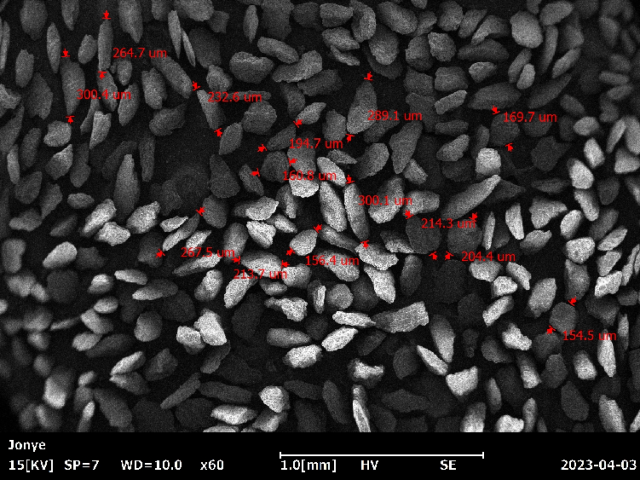
Boron nitride is available as powder, granular, coating, or paint, and Sumetech customizes from nanopowders to precision-machined ceramics with purity up to 99.9%. Customizable parameters include particle size distribution (from coarse granules to sub-micron powders), morphology (angular, spherical, or crushed shapes), purity grades, and packaging specifications. For a die casting plant this matters because form follows method: a brush-applied paint-type product and a spray-ready coating are different specifications even when the chemistry behind them is the same.
Applying boron nitride in a die casting cell: step by step
- Confirm the failure mode. Identify where adhesion actually occurs — the cavity, the cores, or the hot metal-contact surfaces around them — and what it costs in scrap and cleaning time. A BN release coating addresses adhesion and wetting; it does not replace die temperature control or mechanical maintenance.
- Select the form. Choose powder, granular, coating, or paint according to whether the surface will be brushed or sprayed, and how the film is refreshed during production.
- Fix the grade. Specify purity up to 99.9% and, where film uniformity is critical, the particle size distribution and morphology. Customization runs from coarse granules to sub-micron powders.
- Apply by brush or spraying machine. These are the two documented application methods for Product 8233. Brushing suits localized touch-up on a specific hot spot; a spraying machine suits larger or repeatable coverage.
- Dry the film before production contact. This is a high-temperature coating, and where a controlled high-temperature drying step is used on your line, validate that schedule against the die substrate and your own working conditions rather than copying a schedule from another plant. Product operation is subject to actual working conditions.
- Store it correctly. Keep the product dry and sealed, and use it before the expiration date. This is a shelf-life and moisture-control requirement, not a preference: a coating performs only as well as the powder it was prepared from.
- Validate on the real cell. Run the trial on the surface that fails, not on a laboratory coupon, and measure release behaviour, surface finish, and cleaning frequency across a realistic production period.
- Scale on stated commercial terms. The minimum order quantity is 10 kg, the stated lead time is 30 days, and monthly capacity is 1000 MT — enough headroom for a trial lot to become a scheduled consumable without a second qualification cycle.
Use cases: where a BN release coating fits
Wheel hub demolding: a Turkish die caster’s result
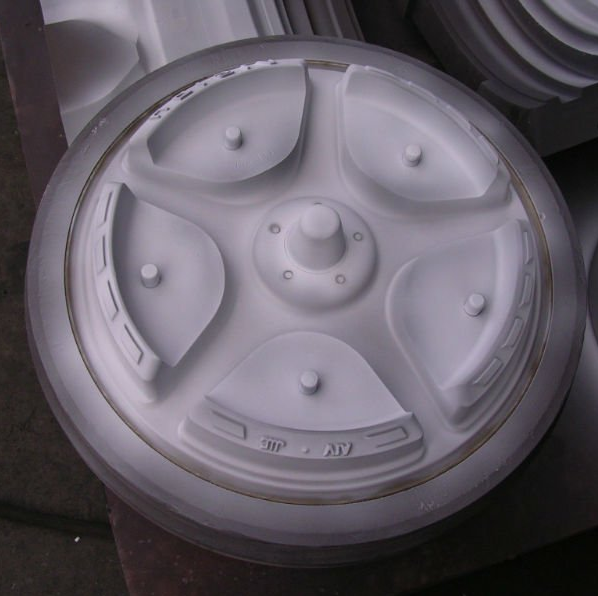
The most directly relevant reference case is a manufacturer in Turkey that used Product 8233, a boron nitride coating, for wheel hub demolding. The plant used 200 kgs over a period of one year, and the reported result was that adhesion during demolding was effectively prevented. The mechanism credited for that outcome was the product’s soft texture and low coefficient of friction — the same layered-structure property that produces low-friction, release behaviour in h-BN. This is a production application of the same class of part and alloy that die casters work with daily, not a laboratory result.
Precision casting and continuous casting
Product 8233 is used in the precision casting industry, and it is applied in horizontal continuous casting and amorphous ribbon processes, where molten metal contact is continuous rather than cyclic and the release layer has to hold up across long run times. In both settings the value comes from the same combination: non-wetting behaviour plus corrosion resistance against molten metals.
Beyond aluminum: glass, semiconductors, and thermal protection
The same product is used in the optical glass and vacuum coating industries for high-temperature lubrication and demolding projects; in the semiconductor industry for thermal management and heat dissipation, where it works as a high-temperature electrical insulator with low dielectric constant; and in high-temperature containers and thermal protection applications. It is also listed for thermally conductive filler, photovoltaic technology, solar thermal energy storage, military and aerospace, superhard materials, cosmetic additives, functional fibers, and functional ceramics — which is why one BN specification can often serve several stations on the same site.
Comparison table: Product 8233 at a glance
| Attribute | Documented specification (Product 8233) |
|---|---|
| Product name | Boron Nitride |
| Forms | powder, granular, coating, paint |
| Material family | Boron nitride ceramic, boron nitride coating, boron nitride fiber, boron nitride painting, BN coating |
| Max working temperature | 900 °C in air; 2000 °C+ in inert gas |
| Max purity | 99.9% |
| Release-relevant properties | Non-wetting and corrosion-resistant against molten metals and acids; graphite-like layered structure with low coefficient of friction; high-temperature lubricant and release agent |
| Additional properties | Thermally conductive; high-temperature electrical insulator with low dielectric constant |
| Application method | Brush or spraying machine |
| Storage | Keep dry and sealed storage; use before the expiration date |
| Operating basis | Subject to actual working conditions |
Scenario fit map: which property solves which problem
| Scenario | Documented function of boron nitride | Property that enables it |
|---|---|---|
| Aluminum, magnesium, and zinc die casting tools (molds, troughs, ladles) | Release coating supporting easy release and better casting surface quality | Non-wetting behaviour, low-friction layered structure |
| Automotive wheel hub demolding (Turkey case) | Prevents adhesion during demolding | Soft texture, low coefficient of friction |
| Precision casting | Release agent for metalworking tool manufacturing; non-wetting and corrosion resistance against molten metals | Chemical inertness |
| Horizontal continuous casting and amorphous ribbon | High-temperature lubrication and demolding | Thermal stability at 900 °C in air / 2000 °C+ in inert gas |
| Optical glass and vacuum coating | High-temperature lubrication and demolding | Non-wetting, chemically inert surface |
| Semiconductor thermal management | Thermal management and heat dissipation; electrical insulation | Low dielectric constant, thermal conductivity |
| High-temperature containers and thermal protection | Thermal protection under severe thermal conditions | Stability at 900 °C in air / 2000 °C+ in inert gas |
What the specification does not tell you: the documented data covers temperature ceilings, purity, forms, application method, and storage. It does not publish coating thickness, film consumption per die, or a cycle count before reapplication, because those depend on actual working conditions. Treat them as trial outputs rather than catalogue values, and ask the supplier to support the trial instead of assuming a standard number transfers to your cell.
FAQ: boron nitride coatings for aluminum die casting
Is boron nitride compliant for use in European die casting plants?
For the EU market, the documented position is that boron nitride is compliant with REACH (Regulation EC 1907/2006) as a substance used in industrial applications, and boron nitride coating is commonly traded under HS code 28500020 for import and export declarations. Because compliance is usually a plant-level question rather than a product-level one, European buyers typically pair the REACH position with laboratory evidence. Sumetech Industry Co., Ltd states that its laboratory has passed CMA (China Measurement Certification) and CNAS (National Laboratory Accreditation), and production quality control is described as 100% testing.
Can a boron nitride coating be applied inside a working aluminum die casting cell?
Yes. The documented application methods for Product 8233 are a brush or a spraying machine, both of which fit between cycles in a die casting cell rather than requiring a separate coating line. The coating operates under high-temperature conditions and is used according to actual working conditions, so the practical schedule — how often the film is refreshed and on which surfaces — is set by trial on the cell rather than by a fixed universal rule. Its function in that setting is a high-temperature lubricant and release agent that prevents adhesion in metal melting and glass processing, with thermal stability up to 900 °C in air and over 2000 °C in inert atmospheres.
What drives the cost of a boron nitride release-coating programme?
The documented cost drivers are specification-related, not brand-related: the form ordered (powder, granular, coating, or paint), the purity grade (up to 99.9%), and the level of customization — particle size distribution from coarse granules to sub-micron powders, morphology (angular, spherical, or crushed), purity grades, and packaging specifications. Order quantity relative to the minimum order quantity of 10 kg also affects unit economics, because a trial lot and a full container shipment are not priced the same way. This article does not quote prices, because price follows the final specification; a quotation is available once that specification is defined.
How do we validate a boron nitride release coating before committing to production volumes?
Start with a trial lot at or above the 10 kg minimum order quantity and run it on the surface that is actually sticking, not on a spare die in a laboratory. Apply by brush or spraying machine, then evaluate adhesion, release behaviour, and surface finish across a realistic production run. The reference case for this approach is a manufacturer in Turkey that used Product 8233, a boron nitride coating, for wheel hub demolding: 200 kgs over one year, with the result that adhesion during demolding was effectively prevented, credited to the product’s soft texture and low coefficient of friction.
What lead time and supply capacity should a die caster expect?
Sumetech Industry Co., Ltd, a China-based manufacturer of metal smelting and casting auxiliary materials, lists a lead time of 30 days, a monthly capacity of 1000 MT, an annual output of 5000 MT, and after-sales support through remote and on-site assistance. Around 90% of output is exported, with main markets including Turkey, Japan, Korea, and Europe. To move from evaluation to a decision, request a boron nitride sample or a specification-matched quotation through info@sumetech.com, or download the Sumetech 2026 catalogue to review the full product range before the technical discussion.
Conclusion: a release strategy, not a single purchase
Molten aluminum adhesion is a chemistry problem at the die surface, and the answer for most die casting cells is a coating that refuses to be wetted by the alloy. Boron nitride — supplied by Sumetech Industry Co., Ltd as Product 8233 in powder, granular, coating, and paint form — delivers the combination a casting cell requires: a non-wetting, corrosion-resistant surface against molten metals, thermal stability rated at 900 °C in air and over 2000 °C in inert gas, purity up to 99.9%, and an application routine built on a brush or a spraying machine.
Three habits turn that product into a working release strategy. First, specify the form and grade against the actual surface and method, not against a generic boron nitride listing. Second, respect the dry, sealed storage requirement and the expiration date — a coating is only as consistent as the powder behind it. Third, validate on the production cell, the way the Turkish wheel hub application was validated over a full year, before writing the coating into a standard process sheet.
Testing boron nitride on a sticking die?
Request a boron nitride sample or a specification-matched quotation from Sumetech Industry Co., Ltd — email info@sumetech.com or WhatsApp +86 13805218959. Trial lots start at a 10 kg MOQ with a 30-day lead time.
Have Questions or Need More Details?
Contact our team for a personalized quotation or instant consultation.
Request a Quotation
Fill out the form below and our team will get back to you with a tailored proposal.
WhatsApp Direct Chat
Prefer to chat in real-time? Message us on WhatsApp for instant assistance & quick answers.
- Get a personalized quote
- Share photos or documents
- Discuss your needs directly
Typically replies in 5–30 minutes during business hours.