
Boron Nitride 8233 for Aluminum vs. Magnesium Die Casting: A Buyer's Comparison Guide
One boron nitride product line, two molten metals, and the checks a die caster should run before signing off a specification.
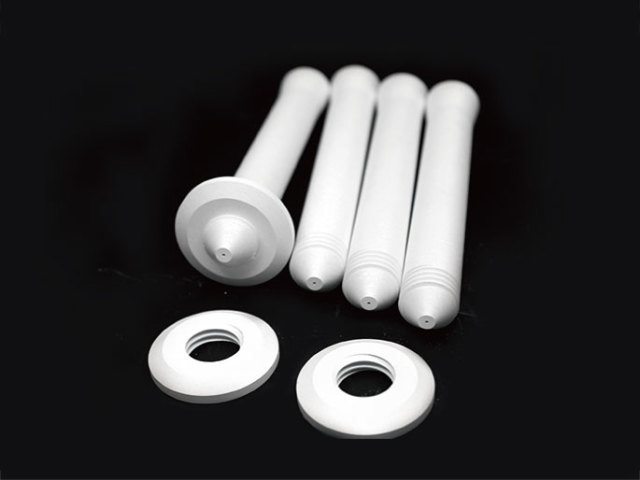
Die casters that run both aluminum and magnesium often ask the same purchasing question: do we need two release coatings, or can one boron nitride product cover both cells? The answer depends on the coating's behaviour at the die face rather than on the label on the drum, and on whether the supplier can document what it claims.
Product 8233 is a boron nitride product supplied by Sumetech Industry Co., Ltd in powder, granular, coating and paint forms. It is suitable for aluminum die casting operations and is used for magnesium die casting operations, including in automotive die casting plants. The release mechanism comes from boron nitride's non-wetting, low-friction layered structure rather than from a metal-specific additive package, which is why the same product family is specified in both aluminum and magnesium work.
This guide compares the two scenarios side by side, explains which properties matter in each, and sets out the application, storage and supplier-qualification points a buyer should confirm before placing a first order.
Short answer for busy buyers: Product 8233 works in both aluminum and magnesium die casting because its release behaviour is physical rather than metal-specific. It is non-wetting and corrosion resistant against molten metals, provides high-temperature release and lubrication, and remains stable at approximately 900 °C in air and above 2000 °C in an inert atmosphere. It is applied by brush or with a spraying machine, must be stored dry and sealed, and must be used before the expiration date.
The Real Problem: Adhesion, Heat and Chemical Attack
A die release coating has to solve three failure modes at once. The first is adhesion: molten metal wetting the die surface and sticking once it solidifies, which produces drag marks, difficult ejection and unplanned downtime for manual cleaning. The second is thermal breakdown: a coating sitting on a hot die face must not degrade into a residue that contaminates the casting. The third is chemical attack: molten metal, together with the alloys and fluxes around it, will corrode many coating materials over a production shift.
Aluminum and magnesium stress those three failure modes differently. Molten aluminum is generally handled on the assumption that it will wet and adhere to hot steel tooling, which is why release coatings in aluminum cells are judged largely on anti-stick performance and on how many shots pass between re-applications. Magnesium brings additional oxidation sensitivity during melting and handling, and magnesium castings destined for automotive programs are commonly held to tight surface-quality expectations, where a poor release shows up immediately as a surface defect.
The practical consequence for a buyer is that a coating qualified only for aluminum cannot simply be assumed to perform in a magnesium cell. Equally, a coating whose release behaviour is chemically driven rather than metal-specific is worth evaluating in both. That is the evaluation this guide supports.
Industry Background: Where Boron Nitride Demand Comes From
Boron nitride is no longer a niche laboratory material. Grand View Research valued the global hexagonal boron nitride market at USD 949.4 million in 2024, with Asia Pacific taking a 40.6% revenue share and China alone accounting for 41.1% of the Asia Pacific total. Within that market, paint and coating applications were the largest single application segment in 2024 at 32.8% of the total. That share reflects how many foundries and casting plants now rely on boron nitride release layers instead of conventional lubricants.
A separate commercial study published by Dataintelo put the global boron nitride coatings market at USD 2.8 billion in 2025. The two figures are not directly comparable, because publishers define the coating category at different points in the value chain, but they point in the same direction: coating demand is large, global and concentrated in manufacturing regions.
Three practical consequences follow for buyers. First, material supply is available from multiple regions, so supplier selection rather than material scarcity is the deciding factor. Second, because the category is broad, specification language matters: boron nitride coating can mean very different products at different purities and in different physical forms. Third, regulatory paperwork travels with the material, and boron nitride is compliant with EU REACH (Regulation EC 1907/2006) as a substance used in industrial applications. For import and export purposes, boron nitride coating is commonly classified under HS code 28500020.
Product 8233 in Detail: One Product Family, Two Casting Scenarios
What Product 8233 is
Product 8233 is the boron nitride product line from Sumetech Industry Co., Ltd, a manufacturer of metal smelting and casting auxiliary materials based in Xuzhou, China. The company was founded in 2019, operates a 6,000 m² production facility with a five-technician R&D and quality team, and exports around 90% of its output, with Turkey, Japan, Korea and Europe among its main markets. Its product portfolio covers both potassium aluminium fluoride and boron nitride.
8233 is supplied in four forms: powder, granular, coating and paint. That range matters in die casting because plants apply release layers differently. A foundry that sprays generally specifies a ready coating or paint, while a plant that prepares its own suspension buys powder or granular material and controls the mix itself.
The published technical parameters of the product are:
- Material: boron nitride
- Supplied forms: powder, granular, coating and paint; also described as boron nitride ceramic, boron nitride coating, boron nitride fiber and boron nitride painting
- Maximum working temperature: 900 °C in air
- Maximum working temperature: 2000 °C+ in an inert gas atmosphere
- Maximum purity: 99.9%
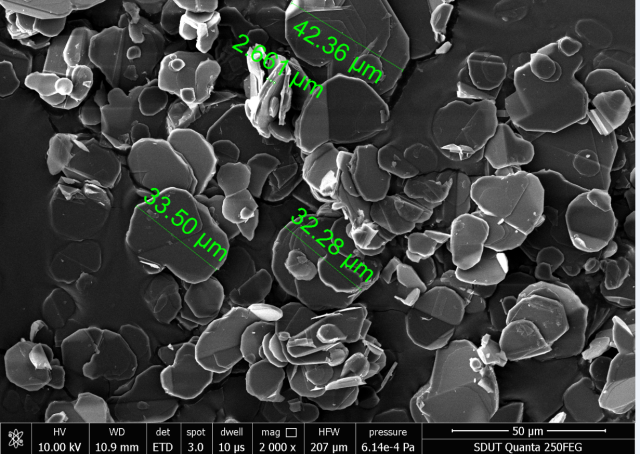
Properties that matter at the die face
- Thermal stability. 8233 is stable at approximately 900 °C in air and above 2000 °C in an inert atmosphere, which keeps the coating intact at the temperatures a die face and shot sleeve actually see.
- Release and lubrication. Boron nitride has a graphite-like layered structure, so it is soft and has a low coefficient of friction. That makes it a high-temperature lubricant and release agent, and it effectively prevents adhesion in metal melting, glass processing and plastic moulding.
- Non-wetting and corrosion resistance. The material is chemically inert and is non-wetting and corrosion resistant against most molten metals and chemicals. This is the property that stops solidified metal from bonding to tooling.
- Electrical and thermal behaviour. Boron nitride is a high-temperature electrical insulator with a low dielectric constant, and it is thermally conductive.
- Customisable morphology and purity. Particle form and purity grade can be specified, up to a maximum purity of 99.9%.
8233 in aluminum die casting
In aluminum die casting operations, 8233 is used as the release and anti-stick layer between molten aluminium and the die surface. Its function is straightforward: stop molten aluminium from wetting the tooling, so that parts release cleanly and the die face does not build up a layer of adhered metal that has to be scraped off by hand.
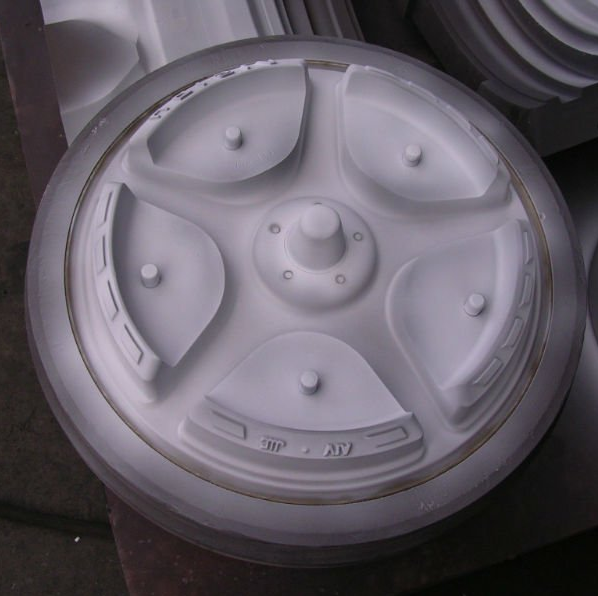
A one-year reference case from a Turkish manufacturer illustrates the effect. The customer, a manufacturer running wheel hub demolding, ordered 200 kgs of boron nitride and reported that the product effectively prevents adhesion across a one-year period. The properties cited for that result were the product's soft texture and low coefficient of friction.
For aluminum buyers, the practical selection criteria are the anti-stick performance of the grade, the temperature envelope relative to their process, and whether the supplier can hold the same particle size and purity across repeat orders.
8233 in magnesium die casting
8233 is also used for magnesium die casting operations, including automotive die casting plants. The same non-wetting and corrosion-resistant behaviour against molten metal applies: the coating resists attack by the melt and prevents magnesium from adhering to tooling surfaces.
Magnesium cells generally place more weight on two things. The first is surface quality, because magnesium castings for automotive programs are usually judged on how cleanly they release, and surface defects on a magnesium part are difficult to correct downstream. The second is process consistency, because magnesium is handled in a more oxidation-sensitive environment, so plants prefer a release layer whose behaviour does not change from shift to shift. Product 8233 addresses both through the same mechanism: high-temperature stability combined with non-wetting behaviour, rather than through a reactive additive.
The other practical difference is equipment. Because 8233 is applied by brush or with a spraying machine, a plant already set up for brush or spray application does not need new tooling to trial the material in a magnesium cell.
Aluminum vs. Magnesium with Product 8233: Buyer Comparison Table
The table below compares the two scenarios on the factors that actually change a purchasing decision. Every value is taken from the published product data for 8233 and the supplier's stated commercial terms.
| Decision factor | Aluminum die casting with 8233 | Magnesium die casting with 8233 | What it means for the buyer |
|---|---|---|---|
| Product fit | Suitable for aluminum die casting operations | Used for magnesium die casting operations, including automotive die casting plants | One product family can be evaluated for both cells instead of maintaining two specifications |
| Release / anti-stick mechanism | Non-wetting to molten aluminium; prevents adhesion | Non-wetting to molten magnesium; prevents adhesion | Same physical mechanism in both cases; still validate per alloy and die design |
| Maximum working temperature | 900 °C in air; 2000 °C+ in inert gas | 900 °C in air; 2000 °C+ in inert gas | Identical thermal envelope, so one temperature check covers both processes |
| Corrosion resistance | Resistant to most molten metals and chemicals | Resistant to most molten metals and chemicals | Longer die-face life and less cleaning downtime in either cell |
| Lubrication | Graphite-like layered structure; low coefficient of friction | Graphite-like layered structure; low coefficient of friction | Supports ejection without a separate lubricant step |
| Application method | Brush or spraying machine | Brush or spraying machine | Existing application equipment can be reused in both cells |
| Supplied forms | Powder, granular, coating, paint | Powder, granular, coating, paint | Match the form to the plant's mixing or spraying practice |
| Maximum purity | 99.9% | 99.9% | Same purity ceiling applies to either specification |
| Storage requirement | Keep dry and sealed; use before the expiration date | Keep dry and sealed; use before the expiration date | Storage discipline is identical across both cells |
| Minimum order quantity | 10 kgs | 10 kgs | A small trial quantity can be purchased before scaling up |
| Standard lead time | 30 days | 30 days | Plan trials around the standard lead time rather than around assumed stock |
Step-by-Step: Qualifying Product 8233 for a Die Casting Cell
Qualification follows the same seven steps whether the target is an aluminum cell, a magnesium cell, or both. The order matters, because each step narrows what the next one has to prove.
- 1. Define the scenario and pick the form. Decide whether the specification covers aluminum, magnesium or both, then choose between powder, granular, coating and paint. Plants that spray generally start with a coating or paint; plants that prepare their own suspension start with powder or granular material.
- 2. Check the temperature envelope against the process. Boron nitride 8233 is stable at approximately 900 °C in air and above 2000 °C in an inert atmosphere. If the die face or the surrounding atmosphere sits outside that envelope, the application needs re-qualification.
- 3. Prepare the die surface. Contaminants and old release residue interfere with any release layer, so the tooling should be cleaned and dried before the first application of a new product.
- 4. Apply the material. Product 8233 is applied by brush or with a spraying machine. Brushing suits localised areas and touch-up; spraying suits full die faces where even coverage matters most.
- 5. Dry the layer before the die returns to service. A coating applied wet must be dried before it meets molten metal. The correct drying profile depends on the substrate and the coating thickness, so it should be taken from the supplier's technical guidance for the specific form supplied.
- 6. Run a controlled trial and record the outcome. Log release behaviour, surface finish, cleaning frequency and the number of shots between re-applications. Record aluminum and magnesium cells separately, because the same product can behave differently at different die temperatures and cycle times.
- 7. Store what you do not use. Product 8233 must be kept dry and sealed and used before the expiration date. Opened containers that take on moisture are a common cause of inconsistent coating performance.
Use Cases Where One Specification Serves Both Metals
Product 8233 is used across a broad set of high-temperature industrial applications. The die casting cases below are the ones where aluminum and magnesium buyers most often specify the same material.
- Automotive die casting plants. Both aluminum and magnesium die casting operations, including automotive plants, appear in the product's application scope. In these plants the release coating is judged on release consistency and on how often a die has to be pulled for cleaning.
- Wheel hub demolding. The Turkish reference case, in which a manufacturer ordered 200 kgs of boron nitride and reported effective prevention of adhesion over one year, is a wheel hub application.
- Plants running aluminum and magnesium on one site. The clearest cost argument for a single specification is a plant with both cell types: one material, one storage regime, one reorder process and one qualification file.
- Precision casting and horizontal continuous casting. These processes appear in the product's applicable industry list alongside die casting and place similar demands on release behaviour and thermal stability.
- Other high-temperature release duties. The same non-wetting and lubrication behaviour is used in glass processing, plastic moulding and metal melting, wherever adhesion control is the objective.
How to Qualify a Boron Nitride Supplier for Both Metals
Once the product itself is understood, the remaining risk sits with the supplier. Five checks cover most of it.
- Regulatory documentation for the destination market. Boron nitride is compliant with EU REACH (Regulation EC 1907/2006) as a substance used in industrial applications. EU buyers should request the current compliance statement for the exact grade ordered rather than relying on a generic category claim, and file it with the material documentation for the order.
- Laboratory and quality capability. Sumetech Industry Co., Ltd states that its laboratory holds CMA (China Measurement Certification) and CNAS (National Laboratory Accreditation) accreditation, and that products are 100% tested.
- Customisation capability. The supplier operates an OEM/ODM model and can customise size and colour, which matters when 8233 has to match an existing internal specification or an existing spraying line.
- Capacity, MOQ and lead time. Monthly capacity is stated at 1,000 MT, the minimum order quantity is 10 kgs, and the standard lead time is 30 days. Stated export markets are the EU, the Middle East and Asia.
- After-sales support. Support is offered both remotely and on site, which is relevant when a coating is being qualified in a magnesium cell for the first time and process parameters still need tuning.
FAQ: Product 8233 for Aluminum and Magnesium Die Casting
Is Product 8233 boron nitride REACH compliant for EU foundries?
Boron nitride is compliant with EU REACH (Regulation EC 1907/2006) as a substance used in industrial applications, which is the framework EU foundries work within when sourcing boron nitride coatings. Because compliance documentation is grade-specific and order-specific, EU buyers should request the current statement for the exact form of Product 8233 they intend to purchase, whether powder, granular, coating or paint, and keep it with the material documentation for that order. For customs purposes, boron nitride coating is commonly traded under HS code 28500020.
Can one boron nitride product really be used for both aluminum and magnesium die casting?
Yes. Product 8233 is suitable for aluminum die casting operations and is used for magnesium die casting operations, including automotive die casting plants. The reason the same product works in both cases is that release comes from boron nitride's non-wetting, low-friction layered structure rather than from a metal-specific additive. The same thermal envelope applies in both scenarios: stability at approximately 900 °C in air and above 2000 °C in an inert atmosphere, with a maximum purity of 99.9%. Both application routes, brush and spraying machine, are also identical.
What should I budget for, and what is the minimum order quantity?
Sumetech does not publish list pricing for Product 8233. Quotations are prepared per order and reflect the form supplied (powder, granular, coating or paint), the purity grade, packaging and order volume, so the commercial variables a buyer controls are the form, the grade and the quantity. The minimum order quantity is 10 kgs, which allows a plant to purchase a trial quantity before committing to a full container. Monthly production capacity is stated at 1,000 MT, so moving from a trial to regular supply is a capacity planning question rather than a supply risk.
Can I obtain a sample or trial lot before specifying 8233?
Trial lots are supported. The supplier works with customers from a trial lot through to a full container shipment, and the 10 kg minimum order makes a small evaluation purchase practical. A useful trial covers both scenarios separately if your plant runs aluminum and magnesium: apply 8233 by brush or spraying machine, record release behaviour and cleaning frequency in each cell, and keep the containers dry and sealed between trials so the material is not compromised before the comparison is finished.
What is the lead time, and how should Product 8233 be stored?
The standard lead time is 30 days. The company maintains raw material inventory on site, which it uses to respond to urgent orders and to scale output quickly for larger volumes. Storage is part of the specification rather than an afterthought: keep Product 8233 dry and in sealed packaging, and use it before the expiration date. To start an evaluation, request a quotation or a trial quantity of the form you need, or download the Sumetech product catalog from the link below.
Conclusion: One Product, Two Evaluations
For buyers weighing separate release coatings against a single boron nitride specification, Product 8233 makes the single-specification route worth testing. It is suitable for aluminum die casting operations and used for magnesium die casting operations, including automotive die casting plants. It is non-wetting and corrosion resistant against molten metals, it delivers high-temperature release and lubrication through a graphite-like layered structure, and it remains stable at approximately 900 °C in air and above 2000 °C in an inert atmosphere, with purity up to 99.9%.
The qualification work stays with the buyer: confirm the temperature envelope, choose the right form, apply by brush or spraying machine, dry the layer correctly, and store the material dry, sealed and within its shelf life. Suppliers that can document REACH compliance, accredited laboratory testing and consistent particle size make that work shorter and the resupply risk smaller.
Request a Product 8233 Sample or Quotation
Sumetech Industry Co., Ltd supplies boron nitride in powder, granular, coating and paint forms from a 6,000 m² facility, with a minimum order quantity of 10 kgs and a standard lead time of 30 days.
Email: info@sumetech.com | Tel / WhatsApp: +86 13805218959 | Website: www.sumetech.com
Catalog download (PDF): Catalog of Sumetech 2026
Prefer to talk first? Send a WhatsApp enquiry with your alloy, die material and process temperature, and the technical team will advise on the right form of 8233.
Have Questions or Need More Details?
Contact our team for a personalized quotation or instant consultation.
Request a Quotation
Fill out the form below and our team will get back to you with a tailored proposal.
WhatsApp Direct Chat
Prefer to chat in real-time? Message us on WhatsApp for instant assistance & quick answers.
- Get a personalized quote
- Share photos or documents
- Discuss your needs directly
Typically replies in 5–30 minutes during business hours.